Featured

The Green Dragon: Part III

Succession

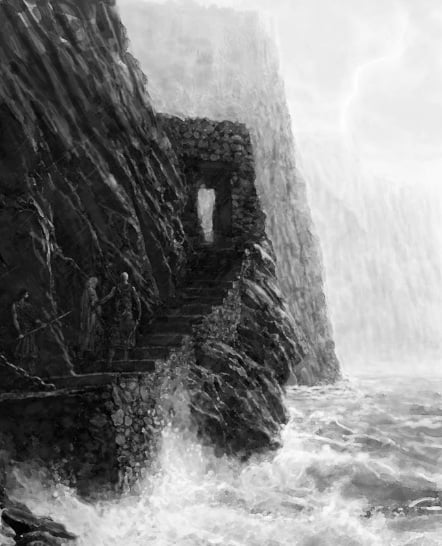
The battle above Storm’s End, by Chase Stone from The World of Ice and Fire

“A violent struggle for succession was likely no matter who the Old King chose to succeed him.”

Fire and Blood, Heirs of the Dragon

It is probably correct to say that House Targaryen, when they arrived on the shores of Dragonstone, lacked a succession law that fit the constraints of the feudal society they were soon about to conquer. Aegon and his kingdom passed from Aenys to Maegor to Jaehaerys seemingly on Alexander the Great’s maxim of giving his Empire to “the strongest”, with even the barest succession law- the King designating his successor- ignored two out of the three transfers of power. This probably dates back to the Targaryens’ roots. The Targaryens were somewhat insignificant magnates in the Freehold of Valyria, a republic, and while we know really nothing of Valyrian governance or inheritance, we can assume that things like this had less grave importance than in feudal Westeros, as they do in the Valyrian free cities that succeeded the mother republic. Seats on whatever councils or Senates lead the Valyrian Republic were important, vast properties spread across Western Essos probably more so, but lacked the same urgency of questions of succession in a monarchy, where the person who succeeds the King becomes the center of a continent-spanning political system. The Roman Republic, which Valyria is almost certainly based on, had lots of civil wars, foreign wars, bitter dynastic struggles, and marriage alliances, but it didn’t have a lot of wars over succession disputes within a single dynasty. If a Targaryen of Old Valyria died without heir, cousins and in-laws would squabble in courts over property titles, if a Targaryen of Westeros died, the rulership of a great realm was at stake, stakes so high that it would inevitably lead to civil war between the various parties up for succession. 

Valyria, by tommyscottart. For at its palaces and great buildings, Valyria was never ruled by a king- or agnatic succession

Whatever system could be said to be used after the death of Aegon the Conqueror was marked by civil war and endless strife, and the reigns of Aenys and Maegor saw Westeros engulfed in conflict after conflict. The right of conquest hung over this new kingdom like the sword of Damocles. Aegon was not the legitimate son of the seven kings he defeated, he gained his kingdom by dragon and sword. Why couldn’t his heirs do the same? After all, there were a growing number of dragons and one was enough to cow entire kingdoms into submission. Riding a dragon to the defeat of your enemies was a viable way to make yourself King, and undoubtedly many a Targaryen prince saw the realm the way King Renly saw it after the reign of his brother- 

“Robert won the throne with his warhammer.” He swept a hand across the campfires that burned from horizon to horizon. “Well, there is my claim, as good as Robert’s ever was.”

A Clash of Kings, Catelyn II

Aegon forged his kingdom in fire and blood, what was to stop Daemon the Rogue Prince, Corlys Velaryon, or any of the ambitious and powerful personalities of the extended Targaryen family tree from doing the same? Why does the dragon need to concern itself with the opinion of the sheep? Well, perhaps, the “sheep” did not consider themselves as such. 

A hypothetical Targaryen king could not “make a desert and call it peace”, as Tacitus said about the Romans. They had to balance interests from all over their vast realm. Maegor the Cruel tried to do it, and was stuck with the epithet of “Cruel” and killed by the Iron Throne itself. He was replaced by his nephew, who had the backing of great lords and the tired masses on his side. Striking out on your own with a dragon could certainly gain you the throne, but it could not keep the throne. The Targaryens needed to balance the overwhelming force they could present with a softer, “Greener” image. They needed to respect the Faith of the Seven, the Lords of Westeros they ruled over, and even the unruly citizenry of King’s Landing, who might be politically marginalized, but had the numbers to create enormous problems for an unpopular ruler. Winning over the Faith was always a challenge for the Targaryens. They were imbued and drew their power from so many customs of Old Valyria, such as dragonriding and incest, that the Faithful found either unnatural or deeply repulsive. Attempting to control it at a distance, with the court in King’s Landing a long way away from the center of the Faith at Oldtown, was another challenge. The Targaryens had to force doctrine changes, disarm faithful orders, and settle into an uneasy peace that would not truly be resolved until the days of Blessed Baelor.

Aegon I being crowned in the Starry Sept, notably kneeling before the High Septon, by Michael Komarck

The lords were also difficult to manage, the Targaryens were facing down three dynasties that had once been Kings in their own right in the recent past, one of which (the Starks) were basically still Kings in all but title. The remaining great houses clung onto their seats with the help of Targaryen support and marriage alliances, but had difficulty practically controlling their vassals- the Reach and the Riverlands produced whole armies for opposite sides of the Dance, and would do so for every war right down to the War of the Five Kings (where only one of the two produced opposing armies). The Greyjoys were also new, and had a political culture that required them to physically attack…somewhere, ideally the nearby western shores of Westeros. Finally, the Baratheons were close relatives of the Targaryens, through intermarriage and their origin point from the bastard brother of the conqueror, a threat to power in their own right. The lesser houses had dozens of petty grievances with each other, their liege lords and the crown, and had so much to gain from entering into court or picking sides in succession conflicts. Getting to the throne as a Targaryen was a challenge, and balancing all these factors- bread for the commons, prayers for the septons and lands for the lords- was something that requires lots of political talent.

Jaehaerys I and his Queen, Alysanne, did have that political talent. The long reign of the Old King and the Good Queen allowed Westeros to recover and gave plenty of time and space for House Targaryen to rebuild itself. New children were born, new dragons were raised. Yet the question of succession still lingered. With no established law, Jaehaerys deferred to custom and selected Prince Aemon, his eldest son, as his heir, and always treated him as such. It was a logical move. Aenys was Aegon’s first born son and heir, Visenya was older than Aegon yet it was he who forged the Iron Throne. Queen Alysanne did not agree with this, preferring the rights of Princess Daenerys, her eldest, albeit as the girl died while still a child, Aemon was eventually acknowledged by both parents as heir. Maybe establishing strict primogeniture for the Targaryens would have been the best, the Martells and other Dornish seem to have done it without issue for centuries, and I certainly think Queen Alysanne would have been a better monarch than King Jaehaerys. The Targaryens did not have a succession law at this point other than the ability of a King to acknowledge his successor, and the Targaryens often considered themselves above and different from the other houses and nobles of Westeros? Why not establish this as law? Certainly some of it had to do with Jaehaerys’s concern for his own legitimacy. He had an older sister, Rhaena, who had two daughters by his older brother, Aegon. If he had established that women inherit ahead of men, why was Jaehaerys on the throne at all? Right of conquest? That leads us to circle back to the same old problems that have haunted Targaryen succession from the beginning, there needs to be something stable to avoid that right of conquest from rearing its ugly, dragonriding head. 

Jaehaerys and Alysanne, from Fire and Blood. Westeros’s key political partnership, who never could agree on the question of succession

But it was not just stability and legitimacy that Jaehaerys was concerned with, it was also the patriarchy. The Targaryens were not above their Westerosi subjects on everything, and gender norms might have been slightly different in Old Valyria, but patriarchy was entwined with politics and society on both sides of the Narrow Sea. Women were viewed as fickle, lesser, weaker, lacking virtue and character. Good women were silent and chaste, focusing the whole of their lives on their children and families, uninterested in ruling or fighting, which they left to their men. I’m by no means an expert on feminism or the patriarchy in the series, there are others in the fandom who have written some excellent things on it, but I do want to explore the patriarchal norms that kept Targaryen kings from letting their daughters inherit over their sons (until Viserys I anyways) through comparing it to medieval history, comparing and contrasting Westeros with its closest real world analogue. In this I am indebted to The Oxford Handbook of Women and Gender in Medieval Europe, particularly the article “The Political Traditions of Female Rulership in Medieval Europe” by Amalie Fößel, if you’re interested in learning more, please check it out. 

It was rare but not unheard of for women in similar patriarchal societies, Europe in the Middle Ages, to inherit lands and titles from their fathers. Marie of Burgundy, Juana of Castile, Mary and Elizabeth of England, all dot the records of our history, and the conflict GRRM has said inspired the Dance of the Dragons, the Anarchy. It is more important to remember that Fire and Bloodis not a medieval text, George R.R. Martin is not a 13th century author, and the book was published in 2018 not 1218. It should be noted, first off, that there is not a single instance in medieval European history of an elder daughter being made heir over a younger son, so already we are dealing with a much different political situation in terms of what was within the realm of possibility for women as rulers. What Viserys I did would have been considered completely impossible in Western Europe, while in Westeros it strikes people as unusual, maybe unfair to Aegon and the Hightowers, but by no means totally outside the realm of possibility. Only two great lords are so incensed by this that they rise in favor of Aegon, one of which seems to have more issues with Rhaenyra personally than her gender’s ability to rule. 

I think the example of Dorne, the Rhoynar and the prominence of Valyrian women suggest a more equitable society than medieval Europe- where you’d have to go to South India or West Africa to find anything close to equitable treatment for women in terms of political succession. The Anarchy between Stephen and Matilda, which the Dance of the Dragons is most directly inspired by, featured Matilda, the daughter and only surviving child of King Henry I, up against her cousin Stephen of Blois, who was not Henry’s son, but rather his younger sister’s son. His claim was through the female line, perhaps comparable to a war between Laenor Velaryon and Rhaenyra…albeit Laenor had a much, much stronger claim than Stephen did. The general rule was that women inheriting the throne was a measure of last resort for most of the medieval Kingdoms that had women ruling directly. As such, the situations in which women ruled varied broadly and very seldom went unchallenged. Matilda’s claims against Stephen caused decades of civil war across England, the Iberian peninsula was wracked by civil war over a woman’s inheritance several times, and Roberto the Wise’s decision to give the throne to his granddaughter Giovanna caused multiple wars for the succession of the Kingdom, including a claim from his nephews and Giovanna’s own first husband, Andrew of Hungary. 

Giovanna of Naples with her grandfather, Roberto the Wise. Her forty year reign in the 14th century was one of the longest and most successful for any regnant queen, despite numerous challenges and her ultimate assassination

Women rulers in our own patriarchal societies also had their fortunes influenced heavily by the popularity and abilities of their husbands, in ways that seem to matter much more than they do for their Targaryen counterparts. As I mentioned, one of Giovanna of Naples’s husbands went to war with her rather than let her take the throne without him as her co-ruler, and even after his defeat, her next husband Louis of Taranto ended up as her co-monarch and sharing the duties of rulership with her. Matilda did rule in her own right, but her husband, Geoffrey Plantagenet, the Duke of Anjou, was the major factor in driving the lords of Normandy, who disliked Geoffrey of Anjou and did not want his lands and political power increased at the expense of theirs, to back Matilda’s rival Stephen of Blois. The idea of a co-monarchy is never discussed in Westeros, which I do find a bit odd. The closest we get is Queen Alicent’s idea that Rhaenyra and Aegon should marry, but even then she never specifies what the relationship should be- should Rhaenyra be his consort, he hers, or should both be co-rulers?

Daemon Targaryen, who is a powerful individual with not only a strong claim to the throne in his own right and previous experience with a royal title in the Stepstones, is never discussed as being Rhaenyra’s co-monarch, in fact, he barely even seems to matter when the Greens and Blacks scramble for supporters after the Green Coup in King’s Landing. Lady Jeyne Arryn, who had to remove Daemon from the Vale, says to Prince Jacaerys- 

“Your Prince Daemon used his first wife most cruelly, it is true…but notwithstanding your mother’s awful taste in consorts, she remains our rightful Queen, and mine own blood besides, an Arryn on her mother’s side. In this world of men, we women must band together.” 

Fire and Blood, The Dying of the Dragons: A Son for a Son

Daemon is not just understood not to be Rhaenyra’s equal, he basically does not factor in Lady Jeyne’s decision to commit the forces of the Vale to Queen Rhaenyra. A strong departure from what we would expect to see in Medieval Europe, and much closer to what we would see in our present day. 

A woman ruler could have one very particular advantage over her adversary, which is one of the factors that comes closer to being relevant. Most medieval Queens-regnant were daughters of their father, the previous King and ruler of the realm, while oftentimes their opponents for political power were foreign-born and had limited support outside their own kingdom. Obvious Aegon and his brothers were just as Westerosi as Rhaenyra was, growing up in the Red Keep just as she had, and if anything, their Hightower connections made them more related to the nobility of Westeros than Rhaenyra with her three Targaryen grandparents. I think that is part of why Rhaenyra maintained an advantage over them through most of the war and ended up with her sons, not Aegon’s, taking the throne after her death. She was unquestionably the more Targaryen ruler, both by blood and image- the color black appears on the Targaryen sigil, her claims to rulership outside of Andal tradition placed herself in the tradition of Targaryen exceptionalism. Her first husband was the son of Princess Rhaenys, who many thought was the rightful queen, while her second husband was her uncle, Prince Daemon. She had appeared alongside her father in court for decades as his acknowledged heir, sat in the throne room as a Targaryen King would, and exercised the duties of Targaryen kingship. Though Aegon at the time of his ascension may have had a lot of the trappings of Targaryen power- the red castle, the iron chair, the Valyrian steel sword- Rhaenyra was far more associated with it. Both sides knew it, and it would lead to multiple mistakes, misjudgements and cruelty from the Greens as they tried to become the kind of dragons all of Westeros knew they were not. 

Aegon the Conqueror atop Balerion the Black Dread, by Jordi Gonzalez in The World of Ice and Fire. Rhaenyra could claim this legacy in color and in ancestry more than her brothers.

There is one aspect of how women ruled in the Medieval period that does linger into George R.R. Martin’s work and our modern world, the commonplace view that in order for a woman to ascend to a position of power like the monarchy, they needed to embody masculine traits and fulfill the role of a king. They may be called Queens, but they needed to perform rulership distinct from the power and traditions associated with being a Queen-consort and distinct from gender roles as commonly understood in society. Men were meant to rule and women were meant to be ruled, so for a woman to exercise power, she was called upon by her society to reject certain social aspects of femininity, such as mercy, kindness and motherhood, and embrace masculine virtues of reason, vigor and courage. There are hints of this in the distinction I made between the Greens and the Blacks, and I do think it does filter down to discussions of potential queens in Westeros. It’s never sat right with me the extent to which women who are talked about as being potential queens regnant in Westeros are not distinguished from their male counterparts in any way other than their genitalia. Good Queen Alysanne says to her husband Jaehaerys when he chose Prince Baelon as his heir over Princess Rhaenys, 

“A ruler needs a good head and a true heart,” she famously said, “A cock is not essential.”

Fire and Blood, Heirs of the Dragon

The proponents of Rhaenys and Rhaenyra often fall back on this line, that she could be a ruler “despite” her sex. It makes sense in the patriarchal society that they live in, but it also does underline how Rhaenyra could be associated with the Blacks and that masculine power associated with vigor and virtue, while the Greens, helmed at least partially by Queen Alicent, who always did her very feminine duties- running the King’s Household, singing, bearing children, praying, and tending to the sick- could be associated with femininity, songs and stories. 

Milly Alcock and Emily Carey as young Rhaenyra and Alicent in HBO’s House of the Dragon

Rhaenyra was raised as Viserys’s heir, she sat with him on small council meetings, she traveled with him on royal progresses, she learned how to ride a dragon and fight atop its back, she learned how to be King. She didn’t learn how to be Queen, she didn’t learn from Alicent how to manage a household or how to run a woman’s court. I think this paints Alicent in a different light, it moves her away from the traditional idea of a wicked step-mother, wroth with jealousy and hatred for the younger and more beautiful eldest daughter, willing to betray her gender to spit on her career, and towards being a dutiful mother and queen consort. Alicent performs femininity incredibly well, but yet she still has her gender devalued and ignored by the family she married into, who doesn’t let her be a queen mother and ignores her children’s claims. She ends up window-dressing for House Targaryen, the queen consort who is expected to be a pawn in a pretty green dress. I think this ultimately makes her unable to see a kindred spirit in Rhaenyra, she didn’t see another Queen like herself, she sees another Targaryen King, one that is willing to tear apart her Queenship, murder her children and grandchildren, destroy her family and sack their city, and rejects the social roles she had always cherished and performed to the best of her ability.

Alicent is not right, of course, and in refusing to see Rhaenyra as another woman, because she has been given a different set of expectations, rights and abilities, and she ends up reinforcing the patriarchal society that refuses to acknowledge her own womanhood as completely valid. She’s afraid of Rhaenyra as another Targaryen king, but in doing so she falls in with those who ignore all women’s power and ability to be political players, even ones who “did everything right” like herself. Meanwhile, Rhaenyra’s characterization is torn between the masculine aspects of kingship she needs to embody to seize the throne and her personal experience as being a mother and having a lot of those values of kindness and mercy that her enemies like to ignore, but exists within her character. I’m sure it was a complicated and fraught question for her, and I’m looking forward to Alicent, Rhaenys and Rhaenyra being fleshed out in House of the Dragon. Rhaenyra is played by a non-binary actor, Emma D’Arcy, and they have said some wonderful things about how her experience relates to Rhaenyra’s own struggle between the femininity society has assigned to her and the masculinity her father has assigned to her. 


To bring the question of succession full circle, it is difficult for the Targaryens to mesh the patriarchal society- albeit won more open to female rulership- they live in with the idea that a King can make a daughter an heir over a son. It simply does not work that way anywhere in the lands that the Targaryens rule. The North practices cognatic succession, where the children of a son place ahead of his brothers, while the Andal lands practice agnatic succession, where male heirs are placed above female potential heirs in the line of succession, inheritance is through the male line and women ruling is only a last resort when all other options are exhausted. Neither of these options give much of a claim to Rhaenyra, except to be queen mother to her “Velaryon” children via cognatic succession or to her children with Daemon via agnatic succession. This isn’t fair to eldest daughters, there’s not particular reason why an eldest daughter has less value than an elder son, but it isn’t just about fairness, it’s a question of whether the Targaryen dynasty as a whole are above the laws of the realm by virtue of creating them, or whether they are exceptions to the laws of the realm. Are Targaryens above the patriarchal norms of Westeros? Their male kings usually don’t seem to think so. Neither Jaehaerys or Viserys or even Alysanne attempts to draft a new succession law for Westeros in which it unequivocally stated that either the eldest child inherits, inheritance can only be passed through the male line, or the children of a man’s body proceed to the throne ahead of his brothers, despite their gender. What is given instead are half-measures, stop-gap solutions to get the next succession crisis out of the way and avoid the civil war that was brewing on the horizon. 

The first “stop-gap” was the Great Council of 101 A.C. Proposed by Jaehaerys’s son Archmaester Vaegon, Jaehaerys decided to call all the lords of the realm to great council at Harrenhal to decide the issue of succession between Viserys and Rhaenys and her children for him. Jaehaerys said he would abide by the decision of the council when choosing his successor, but he did not give the Great Council ultimate authority to draft a succession law. The Great Council overwhelmingly selected Prince Viserys to be the heir. Viserys was the young son of a popular prince, Rhaenys may have had the better claim under the cognatic laws of succession prevalent among the First Men, but the majority of the lords in the hall were from Andal kingdoms where Viserys would have been their heir anyways. Rhaenys was even dismissed otu of matters of sex, with her young son Laenor even cast aside, to the fury of Corlys Velaryon and Rhaenys’s Baratheon cousins. The phrasing in “Fire and Blood” by Gyldayne that the Great Council was considered to be “iron precedent” is rather odd; it is clear that Jaehaerys was using this to solve a specific problem with the succession. Nowhere is it implied that Viserys wouldn’t have the authority to choose his own solution for his specific problem of succession, with the possible caveat that he should have called another Great Council if he was unable to decide. Maybe “Fire and Blood: Part II” will give us further revelations on this, but I have always somewhat suspected that the “Iron Precedent” of the Great Council of 101 is something that only truly gets established after the death of Baelor the Blessed by Rhaenyra’s son Viserys II to prevent his niece Daena the Defiant from inheriting the throne. 

The Great Council of 101 A.C. by Marc Simonetti in The World of Ice and Fire

Most lords of Westeros don’t take the Great Council of 101 to mean anything beyond what it is implied at the time, there is relief, if anything, at the idea of Daemon Targaryen not succeeding his brother, but for those who do, I think they arrive at that conclusion because of how large of an event it was. Harrenhal could barely fit all the lords in attendance, inns were packed for miles around, because for once, House Targaryen was giving nobles of the realm an actual, formal share in its governance. Westeros does not have Parliaments like medieval England, Sejms like Poland or Estates General like France, the Great Council was the first time the lords of Westeros got a share of power in the Targaryen court that they considered to be outside the mere service of the King, they were expected to make a formal decision on one of the King’s prerogatives themselves. The Great Council of 101 wasn’t “iron precedent”, but the nobles of Westeros wanted it to be iron precedent. They wanted Andal law codified and didn’t want women to inherit the throne in their patriarchal society, they wanted to have a lasting effect on Targaryen governance, and they wanted their consultation to matter. One day it would, but not in deciding King Viserys I’s successor. 

King Viserys attempted another stop-gap measure after ascending to the throne in 105 A.C.- declaring Rhaenyra, his only daughter by Aemma Arryn, to be his heir over his brother Daemon, and having the lords of the realm swear to it. This was the first step in Viserys’s long and winding path to avoid the civil war that the lords of Westeros felt was looming on the horizon after Aemon Targaryen died without a male heir a decade before. The act of forcing the lords to swear allegiance to Rhaenyra over Daemon was a good idea, and was agreed to by almost every lord, especially Otto Hightower, who was desperate to keep Daemon away from the throne, but this also ends of being a stop-gap measure. After the lords swear to Rhaenyra, Viserys never makes them swear another oath even after the situation is dramatically changed by his second marriage to Alicent Hightower and the three sons she bears for him. Otto nagged Viserys about this to the point where he dismissed him as Hand, and I don’t think Viserys was really afraid of the Hightowers posing a threat to his rule for it. Hightowers were not Targaryens, they were not dragonriders and they were not dangerous to his reign or to Rhaenyra the same way Daemon and the Velaryons were. Daemon Targaryen had been gathering support for his own personal ventures since before the Great Council of 101, when he gathered swords to help put his brother Viserys on the throne. 

Things had only gotten worse from there. Daemon conquered the Stepstones with the aid of Westeros’s most powerful- and angry at Viserys and the Great Council- lord, Corlys Velaryon. Corlys Velaryon is a legendary figure, his ventures across the globe are a thrilling part of Fire and Blood, his vast fortunes and new towns built on Driftmark made him reshape the entire economy of eastern Westeros, but it’s not often talked about how brutally ambitious Corlys Velaryon was. He married Rhaenys, the only daughter of the eldest son of King Jaehaerys, he fought for the rights of her and his son at the Great Council, and later on, would be so obsessed with having a grandchild sit the Iron Throne in name, that he was more than willing to forget that his “grandchildren” were not his by blood. He is doing something very similar to what Otto and the Hightowers are doing, but as a Velaryon, connected by blood to the Old Freehold and in several marriages to the Targaryen dynasty, he starts out with much more advantages, and is willing to be more aggressive with them. When Otto is rejected by Viserys, he sulks off, the whole Green coalition not getting stitched together until the last minute. Corlys was planning the rise of House Velaryon for years, and found a partner in these early years of Viserys’s reign in his brother, Daemon. An alliance was brewing between Daemon and the Velaryons was brewing, one that would engulf the realm in civil war after Viserys’s death. Daemon had collected personal armies and had a better claim in the eyes of some to the Iron Throne than Rhaenyra. 

Steve Toussaint and Eve Best as Corlys Velaryon and Rhaenys Targaryen in HBO’s House of the Dragon

There were two potential solutions to this problem. One was Otto Hightower’s. Have the King remarry, have male children, their claims couldn’t be doubted to be better than Daemon’s, have the King declare his eldest son heir, and Daemon Targaryen would be nothing but an angry wildcard with no support. Viserys was resistant to doing this, however, at least after a while. Maybe it was the love he bore for Rhaenyra, or for Aemma Arryn, respect for the oaths he made the lords of the realm swear, or perhaps he considered his Hightower children too “lowborn” to have a shot at gathering a coalition to repel Daemon, but he kept Rhaenyra as his heir. His solution was to isolate Daemon from the Velaryons by marrying Rhaenyra and Laenor. I see his reasoning, in fact it was very good. As I said above, Corlys Velaryon wanted a grandchild on the Iron Throne just as much as the Hightowers did, if not more so. His options were through Daemon, marrying Laena to Daemon, insisting that their children were the rightful heirs via the cognatic line, and coming after Viserys’s children for having a weak claim from a paper shield of oaths and councils, or through Rhaenyra, marrying Laenor to Rhaenyra, not only getting grandchildren on the Iron Throne but ones bearing his name! Laena did marry Daemon soon after Rhaenyra married Laenor, but by that point, Rhaenyra was tied into the fortunes of the Velaryon family. Daemon would not have Corlys’s support to overthrow her, and with the Hightowers provincials who couldn’t match the number of dragonriders in the extended Velaryon-Targaryen clan, Viserys probably thought he had avoided the civil war he had dreaded for so long. 

Rhys Ifans and Emily Carey as Otto and Alicent Hightower in HBO’s House of the Dragon, the “solution” to Viserys’s problem

But he hadn’t. Not everyone played their part in this plan. Otto and Alicent still insisted that their heirs should be Viserys’s, and despite the fact that the King was dismissive of Hightower power, they still had strong connections and wealth from the Reach at their back. Oldtown was the greatest city in Westeros before King’s Landing. The Hightowers had immense resources and a chokehold on the two most important institutions in Westeros, the Maesters and the Faith of the Seven. They were no match for dragonriders, but Maesters filling the heads of the lord’s children with tales of great Hightower deeds and the validity of Andal succession laws in their lessons and Septons preaching the divinely ordered social roles for men and women in their sermons would have an effect on how the Westerosi thought about their new heiress and her spurned brothers. Things really started veering off course when Laenor and Rhaenyra failed to have any legitimate children. Laenor was uninterested in women sexually, but Rhaenyra was very interested in Ser Harwin Strong, producing three sons that bore the Velaryon name but were very obviously not of Velaryon blood. If proven, the Velaryon children being bastards would force Viserys to remove them from the line of succession, angering Corlys who cared much more about his name on the Iron Throne than his blood, and bring on the very same succession issues the marriage between Rhaenyra and Laenor was meant to avoid. It would also irreparably damage Rhaenyra’s reputation. Westeros could perhaps accept a woman ruler, but an adulterous woman ruler was probably too far even for those loyal to the Princess. Viserys cracked down strongly on those who said that Rhaenyra’s Velaryon children were bastards, he dealt out harsh punishments for those who suggested it, and probably burned down Harrenhal to ensure that Harwin could not live to ever claim the boys as his own. This was a ridiculous offense to the Green camp, everyone knew Rhaenyra’s children were not Laenor Velaryon’s, and Alicent, who had bore the King three legitimate sons, was getting her children’s claims ignored and dismissed in favor of this marriage alliance that had produced no legitimate children. 

Viserys’s attempts to avoid civil war was creating a civil war, but one different than he could have expected when his reign began twenty years before. Daemon was not a threat to Rhaenyra, Rhaenyra was not a protection against Daemon, the two had eloped without his permission and were beginning to have children of their own. Rhaenyra now no longer served the interests of Otto Hightower, who had grandchildren of his own whom many in Westeros considered had a better claim. Viserys I spent his last years lost in a labyrinth of succession problems, begging his wife and daughter to get along, begging his family to respect his wishes and place his daughter on the throne without contest, begging his sons to forfeit their turn on the Iron Throne to children they knew not to be legitimate. With this groundwork laid, we can go back and look at this succession crisis from another angle, from the perspective of the Hightowers, and the desperate attempts Otto and Alicent made to ensure Daemon Targaryen would not be King of Westeros and Aegon Targaryen would. They bitterly struggled against Viserys’s wishes, attempting to assemble some kind of coalition to ensure they could inherit while the sons of King Viserys fought the sons of Princess Rhaenyra in spat after spat. The court was even further divided, the Greens attempted to claim the mantle of Targaryen power but ultimately failed. Their solution was a desperate one, and one that won them no favors, a midnight coup over the dead king’s rotting corpse. 


Hello everyone, I’d like to thank all of you for the support you’ve shown for the first two parts of the essay series, I got a lot of excellent comments and feedback! I originally intended this post to be parts III and IV, but part III got incredibly long (it’s about the same size as parts I and II combined) and I wasn’t able to finish part IV, so I will be posting that sometime this week. I have more essays and series planned, so I hope you enjoyed this part and am looking forward to writing more!

Featured

The Green Dragon: Parts I and II

Oldtown, as depicted it HBO’s Game of Thrones

Introduction

The Dance of the Dragons remains a part of Westerosi history that I  have a complicated relationship with. I think the Dance of the Dragons is in its own right a fairly interesting look at a historical conflict within the series, drawing heavily on the Anarchy between Stephen of Blois and the Empress Matilda that rocked 12th century England. Though the Anarchy is a fascinating part of history, centered around a lot of the same questions of inheritance with similar outcome (the ascension of Henry FitzEmpress certainly mirrors the ascension of Aegon III at the end of the conflict), it’s not exactly “fun reading”, as England broke down in a chaotic civil war, leading to widespread social collapse, fire and blood. The Dance of the Dragons largely differs from the Anarchy in that it is more violent, as Aegon and Rhaenyra’s dragons could kill far more than any Norman knight or Saxon bowman, and created far more destruction across the land. Truly depraved murder plots litter the history of the Dance, both sides find their leadership and army wiped out across the board, and rather than reaching a negotiated peace for the Plantagenet dynasty to ascend to the throne, a host of Northerners and Rivermen butcher their way into an already burnt out King’s Landing, slaughter the Green remnants and put Aegon III on the throne.

As such, the Dance of the Dragons has a rightful reputation as being a very “depressing” part of the lore. It’s hard to feel good rooting for one side or another, or even individual characters. Some of the most interesting and entertaining do horrible things in this conflict, and it turns into a slog. The “Muddy Mess”, the last battle between the Green Baratheon host and the Black Rivermen host, is what I often call the whole conflict, because that’s what it is. A brutal war in the mud, no triumphs and no glory. I understand why, I understand the anti-war message that George is pushing in the book, but it’s easier to grasp anti-war concepts from a close third person like that of Arya or Jaime, out there watching the war be done to the insignificant smallfolk in the way. From the higher perspective of the historian, looking down and casting judgment, it feels more repetitive and sad than a stirring call for peace. 

The aftermath of the Battle of Agincourt, the image I always have in mind for “The Muddy Mess”

I’m not here to complain about the Dance in this essay, nor am I here to compare it to England’s 12th century Anarchy. I would instead like to look at it in relation to A Song of Ice and Fire and the world as a whole, as it contains several broad themes that Martin likes to use in the main series. The first one I want to discuss is the dichotomy of “Green” and “Black” that is present throughout A Song of Ice and Fire. Though the Dance of the Dragons is the only conflict where the participants actually call themselves the “Greens” and the “Blacks”, the terms Green and Black are typically used to refer to two different ideologies, cultures or ways of understanding power in the world of Westeros. Though the reader might be sympathetic to either the green or the black ways of doing things, neither side really represents good or bad, but instead two extremes of the way the Westerosi lords style themselves or exert power.

After that I’d like to move into an examination of the conflict from the side that I feel gets short shrift both in the story and in the community- The Greens. Everytime, without fail, a creator or even just a random account on Twitter asks the fandom which side of the conflict they prefer, overwhelming numbers prefer the Blacks to the Greens. I think there are a lot of reasons for that. It’s easy to associate Rhaenyra with Daenerys, the wronged princess of Dragonstone, the rightful Queen whose path is blocked with male usurpers. The opponents of Rhaenyra represent the patriarchy, men who doubt the ability of women, not to mention all the heel houses of A Song of Ice and Fire, Brackens, Lannisters, Peakes. Her supporters include dynamic, if controversial characters. The formidable Rhaenys, the wronged Queen that Never Was, the adventurous Sea Snake, Corlys Velaryon, who sailed to the very edge of the world in Asshai, Daemon Targaryen, the Rogue Prince, the precursor to Oberyn Martell. They also include House Stark and House Tully, characters that give us warm thoughts of Ned Stark and Brynden the Blackfish, and their vassals, Roddy the Ruin that make us think of Big Bucket Wull and Wyman Manderly, fighting against Criston Cole, who on a good day is a Jaime Lannister. Not only are the Greens less likable, they’re easily associated with an incredibly common trope in history and stories- the wicked Step-Mother. Alicent Hightower Targaryen is frequently described in incredibly misogynist terms- shrew, harpy, hag. She’s barely a woman, she’s barely a person. Even though she’s one of several who convinced Aegon II to take the crown after his father’s death, and was almost entirely marginalized throughout his brief and bloody reign, she ends up a magnet for hate and disdain, betraying her sex, betraying her husband, scheming to murder and kill everyone from Viserys to Rhaenyra. 

Alicent Hightower, portrayed by Olivia Cooke in the upcoming HBO series House of the Dragon

The Greens deserve to have things looked at from their perspective though, which is not natural or easy to do. They’re crossing the Rubicon and seizing the throne for themselves, but they’re not doing so without reason. If you examine the History of the House of Hightower, Ser Otto and his daughter are acting in the tradition of their house going back thousands of years, from the day King Lymond dissolved his kingdom by marrying into the Gardener Kings of Highgarden. Keep their precious city safe by marrying up, ensuring that whoever is ruler the Kingdom Oldtown is a part of is listening to the illustrious House Hightower. The problem for Otto and Alicent is they are entering Targaryen politics as a fraught time, debates over succession, inheritance, the ability of women to rule, and how to derive legitimacy in an age where a dragonrider possessed so much power were wracking the capital and pulling the Targaryen dynasty apart at the seams. 

Otto marries his daughter to the King, but the Hightowers struggle to build a political coalition to back up their claims to rulership, with fortune and mistakes leading them into the war with a disadvantage in armies, dragons and kingdoms. The first phase of the war sees them destroyed, pushed out from their strongholds, their armies destroyed, heirs killed and cities lost. But the Greens are nothing if not flexible, they fight back, gather hosts and through the fortunes of war, do remake their way back to the throne- only to collapse again, in a heap of mistakes, illegitimacy and trauma from the violent conflict that proceeded their final triumph. The Hightower-Targaryen line dies out, and the Greens are confined to history, where they end up a contradiction- treasonous villains, yet the victorious Blacks, including Rhaenyra’s son, Viserys II, end up confirming their right to rule in their ultimate decision on succession. 

First and foremost, to understand the Greens, and their opponents the Blacks, we need to understand how George R.R. Martin uses the colors Green and Black to represent ideas about leadership, rulership, youth and gender throughout his works, both in the more relevant Fire and Blood and The World of Ice and Fire, but also in the main series, where we see the tale of Aegon II and his sister Queen Rhaenyra reflected back to us throughout the series, with emerald and obsidian, jade and onyx, green and black. 


Part I: Greens and Blacks

Rhaenyra and Alicent in their black and green dresses, from Fire and Blood

“It is better than the songs,” she whispered when they found the places that her father had promised her, among the high lords and ladies. Sansa was dressed beautifully that day, in a green gown that brought out the auburn of her hair, and she knew they were looking at her and smiling.”

A Game of Thrones, Sansa II

“Green” power and the color green itself is closely associated with the Reach. From Garth Greenhand down to Margaery Tyrell, the way political and cultural power is exerted in the Reach is through indirect power, based on splendor and prosperity. War itself filters through the long history of the Reach through romantic songs and stories, tales of Roland of the Horn and Garth the Painter driving the Dornish or the Ironborn back into the Mountains and the sea. The steel of their ancestors, not the steel in their hands, gives the Reacherlords their right to rule. Reacherlords and kings through the millennia have made their power clear through the beauty of Highgarden’s orchards and gardens and the number of courses at a wedding feast, or the height of the Hightower or fine cobbled streets and intricate paintings lining the Starry Sept of Oldtown. Chivalry, intricate architecture, courtly language, songs and stories all feed into this- at least on the surface- softer, less brutal form of power. The Reach itself was not built on the battlefield, it was built in the marriage bed. The King of the High Tower married the King of the Reach’s daughter, and he his. The Andal invasions washed over the Kingdom of the Reach in a series of weddings and beddings, not fire and blood. Love, marriage and chivalry creates Green power, operating through women’s courts and courtesies, the good king ruling and the land prospering. When the Tyrells entered King’s Landing with carts brimming with food and roses, when Alicent Hightower read to the dying King Jaehaerys I, when the Gardener Kings married their enemies in front of their living throne, Green power grew, its vines tangling into the hearts and minds of the people of Westeros and lords of the Reach.

Margaery Tyrell on her wedding day to King Tommen, by Ekaterina Burmak

 This is perhaps a more peaceful way of exercising power, but it is also a power of scheming, of women’s courts and whispered conversation, of false phrases dripping with honey. It’s a power of inexperience and youth, it is the power that Renly Baratheon was drawing upon and ultimately what sent his knights of summer to their deaths in the fiery hell of the Blackwater. After all, he casts off the black of House Baratheon for his new banner that proudly flies over his court at Bitterbridge- a gold stag on green. It’s also a power that’s easily viewed as false or illegitimate. The Tyrells are usurpers to the legacy of Garth Greenhand, stewards placed atop the Reach’s throne by Aegon and his dragons, not deep mystical connections to the ancient past. Alicent Hightower, despite her illustrious lineage, has no Valyrian heritage and her and her children are thought of as lesser than Rhaenyra and her children, despite their legitimacy being strongly disputed. 

Andal chivalry also has its own violent failings. The Kingsguard is the institution at the very pinnacle of chivalry, yet as we see through the point of view of Jaime, Barristan and Arys Oakheart, the men who bear the white cloak can never live up that perfect ideal of a chivalric Green knight. Kingsguard knights find themselves disillusioned, chasing love they can never have and committing violence that betrays their oath to protect the weak and the innocent. In the Dance itself, Criston Cole embodies the failures of a Kingsguard knight, betraying his oath, violently killing the lovers of a woman he can’t possess- either literally if you believe Eustace, or metaphorically if you believe Mushroom.

Despite House Hightower and the Great Houses of the Reach being just as ancient and illustrious as House Stark or House Lannister, they and their ways of doing things always seem fresher, newer, indebted to Andal chivalry rather than the ten thousand year history of the First Men, even though, life and power in the Reach has been governed via this kind of rulership for thousands of years. The emphasis on youth, new growth and beauty give the color green the air of mere courtesy and inexperienced failure and across the series, all the way from Garth’s green hand ten thousand years ago, to Alicent’s green dress, to Sansa Stark wearing a green dress, fresh and bright as a spring day, watching the first Tourney that she had always dreamed of. 

Night’s Watchmen fleeing, by Paolo Puggioni

“He swept the cloak back over his shoulders. “But at the Shadow Tower, I was given a new wool cloak from stores, black and black, and trimmed with black, to go with my black breeches and black boots, my black doublet and black mail…The men of the Night’s Watch dressed in black, Ser Denys Mallister reminded me sternly, as if I had forgotten.”

A Storm of Swords, Jon I

As Green power was forged in the light of the spring day, Black power was forged literally- by steel and sword and fire and blood. As Green represents youth, songs and stories throughout George R.R. Martin’s world, black represents experience, order and justice. It isn’t the power of the lush hills of the Reach, with fireplums and Septons and chittering maids, it’s the power that rules the dark forests and windswept hills of the North, the swords in the darkness, the shields that guard the realms of men. It is the color of the Night’s Watch, introduced to us in the main series as the only ones truly aware of the massive problems facing the Seven Kingdoms and the disdain for which southern lords have treated it is causing the Realm itself to crumble in the face of a new Long Night. While the Greens have concerned themselves with dancing, drinking and gossiping, the Blacks have fought and died for their rights and their responsibilities, beyond the Wall, for their liege lords, for their true claims. As Renly represents the Greens, Stannis represents the Blacks, sulking on Dragonstone, shirking the Seven Gods and womanly, decadent court of King’s Landing but holding fast to his claim and his duty, and seeking a path back to power from the Night’s Watch and the Lords of the North. 

Maybe it’s a tad ironic that this color becomes attached so closely to the woman once called the Realm’s Delight (certainly no one in their right mind ever called Stannis that), but is the color of House Targaryen and the hulking monument to Valyrian power on the island of Dragonstone. The castle is black, the banners are black, and Aegon the Conqueror himself rode into Westeros on the greatest beast the world had ever seen, Balerion the Black Dread, the largest dragon to take flight since at least the days of the Doom, if not ever, with black scales, black wings and black eyes. When Rhaenyra dons her black dress, she’s not just donning the colors of Northern justice and the watchers on the Wall, she’s donning the colors of House Targaryen and the colors of Old Valyria, the capital-L Legitimate rulers of Westeros and perhaps, the entire world. That claim and the strength of it creates the Black coalition, Rhaenyra isn’t just Viserys I’s named heir, she is the heir and embodiment of real power, the real House Targaryen, unsullied by the soft and scheming ways of Greenland Andal soft power. 

The Blacks are not all law and justice, they are also fire and blood. Green power emphasizes the concept of an iron hand in a velvet fist, you know the Tyrells and Hightowers have swords by the thousands, but if you play along and listen to their courtesies and marry their sons and daughters, nobody has to get hurt. The Blacks want you to know you could get hurt, and they don’t shy away from it either. Though the Lannisters can often by coded Green or Black in the main series depending on the character and their goals (Tyrion quite literally has one Green and one Black eye), when I think of Tywin Lannister’s infamous quote in season one of Game of Thrones- a show only line, but brilliantly acted by Charles Dance- “The lion does not concern himself with the opinion of the sheep.” We see this mindset a lot with characters coded with the Black over the Green, Daemon Targaryen certainly has never concerned himself with the opinions of the sheep, even if those sheep are high lords and ladies- certainly his behavior towards House Royce, House Arryn, and the Hightowers show us how much he derives his power from his dragon and his sword. He and Rhaenyra, at least during her brief and bloody reign the Iron Throne seem to have taken this bit of “advice” from Cersei, 

Another lesson you should learn, if you hope to sit beside my son. Be gentle on a night like this and you’ll have treasons popping up all about you like mushrooms after a hard rain. The only way to keep your people loyal is to make certain they fear you more than they do the enemy.”

A Clash of Kings, Sansa VI

The Black lion or dragon or stag doesn’t concern themselves with the opinion of the sheep, but the sheep fight back when you rule through fear. They fear Stannis, and thus never flock to his banner. As Tywin Lannister’s corpse rots in Baelor’s sept, his realm built on fear and blood falls apart. When Rhaenyra drives her sister to suicide, executes “traitor” after “traitor” and turns on the dragonseeds that won her the Iron Throne, the Dead Shepherd leads the sheep of King’s Landing into casting down their oppressors, slaying the dragons at the very heart of House Targaryen’s Black claim to rulership. 

We even see the mirror of the failure of the “Green” Kingsguard in the “Black” Night’s Watch, giving up everything for honor and loyalty and following orders in a First Men, protecting the realm way, creates just as much social problems. Romantics like Mance, who story I opened this section with, find themselves cast aside for the love they bear for those they are supposed to hate, and eventually leading armies against the Watch. They also stopped focusing on their mission, to guard the realms of men, leading armies against their deserters like Mance, the Free Folk fleeing from death and danger, rather than fighting the Others. Indeed, they instead offer gifts and share bread and salt with Craster, who has been helping the Others in his own way for decades. The Watch itself is hollowed out, promising meritocracy, but in reality leaning like a crutch on the most unjust institutions of birth and privilege in Westeros (a tendency with Black rulers, from Stannis’s Florents in command to Rhaenyra’s treatment of the heirs of Rosby and Stokeworth). Inflexibility, false promises, breaking before they bend all colors the attempts of the Black ruler to rule justly with lies and failure. 

This color scheme that I have laid out for you is based on generalizations, themes and motifs that have existed throughout the story, from George’s first pitch letter in 1993 all the way down to Fire and Blood in 2018, but no faction or side in Westeros, in any conflict, political or military is fully one thing or the other. Rhaenyra is the Realm’s Delight, and memories of her courtly youth swell her ranks in the Riverlands just as much as her advantage in dragons. Aemond Targaryen fights for vengeance for his lost eye and lost claim to his sister’s bastard children. In the present, Randyll Tarly is in Renly Baratheon’s war councils, but his ancestors fought for Rhaenyra and his style of rulership, fiercely martial, willing to disregard custom to get rid of his very green son Sam and replace him with his sword-wielding younger son, Dickon, is not a particularly “Green” action to take. The Blackwoods have always represented the Black and have princesses and queens and ladies straight out of the highest romance, but the Brackens, their name being taken from the shockingly green ferns of the forest floors, are hardly courtly knights of the Reach that that would imply.

Even in the causes of the war itself, you could argue that the focus on a direct, patrilineal claim rather than frilly nonsense to let a woman inherit is something a Black ruler would do rather than the Green ones who actually push for it. Stannis himself, probably the most representative of the “Blacks” in the modern series, seems to think something like that-

“It has always been so, since Aegon’s day and before. Daemon Blackfyre, the brothers Toyne, the Vulture King, Grand Maester Hareth . . . traitors have always paid with their lives . . . even Rhaenyra Targaryen. She was daughter to one king and mother to two more, yet she died a traitor’s death for trying to usurp her brother’s crown. It is law.”

A Storm of Swords, Davos IV

However, these distinctions and differences appear so much across Fire and Blood and A Song of Ice and Fire that they are important to keep in mind and are an integral part of the story telling, twists, turns and all, George is weaving into his history of the Seven Kingdoms. You wouldn’t expect the trueborn son of the King to rely on the feminine-coded power of his mother to propel him to the throne, or the eldest daughter of the King to ascend the throne on the back of her dragon rather than from schemes and anointments, but that’s exactly what happens. The Black and the Green fight each other to the death in Westeros during the Dance, but who is Black and who is Green aren’t clear cut, and the Black dragon casts a dark shadow over the Greens, who have their trappings of rulership and their paper shield, but do not have the hard power and Targaryen legitimacy they need to truly win the Iron Throne. How did the Greens get in that position, anointed by the Faith of the Seven, controlling Westeros’s three largest cities and the hearts and minds of many within them, but yet the decided underdogs in the Targaryen succession war that would ravage Westeros after the death of King Viserys? To begin, we have to start with the millenia-long rise to the Iron Throne of House Hightower. 


Part II: Of the High Tower

The Hightower at Oldtown by Ted Nasmith

Unlike the other great houses of Westeros- Stark, Lannister, Durrandon, Arryn, Martell and Gardener- the Hightowers appear in the annals of history fully formed, the shadowy lords of the most ancient and mysterious spot in Westeros, the Great High Tower that lies on Battle Isle, at the mouth of the Honeywine River. It is beyond the ability of even the wisest Maester of the Citadel to determine how old Oldtown is, but the base of the Hightower is older than that, built of the dark, fused, greasy stone, that of the Seastone Chair, and similar to that Old Valyria, albeit without the intricacies and designs the Valyrians shaped their dragon-forged stone into in the great cities of the Valyrian Peninsula or fortresses like Dragonstone or the great walls of Volantis. The World of Ice and Fire introduces us to the distant ancestors of Otto, Alicent and King Aegon II as dwelling in the “gloomy halls, vaults and chambers of the strange stone” that sat below the original High Tower, a flimsy wooden structure meant as a beacon light to make the First Man village that would one day become the great city of Oldtown. 

It’s an odd start for a house associated with court, chivalry, and the color green, a mysterious lord ruling from an ancient cavernous stronghold that declared himself king of the lands watered by the Honeywine River. It’s a bit of an odd history in general, and it’s not one I can find any real world Western European parallels to. Westeros is of course, not Western Europe and fantastical elements mean that concepts like a single unbroken dynasty ruling a dynamic city for ten thousand years are not beyond the pale, but it is curious to me how much the great cities of Westeros end up planned like the towns of the Middle Ages, springing up around power centers created by lords rather than existing for generations before on a pre-existing trade center. Oldtown is perhaps the closest to a traditional model, but those traditional cities, with having lasted through centuries of city-centric Roman rule or having grown up with specific rights and privileges granted to them by feudal, agriculturally-focused kingdoms, were almost never ruled by dynasties, they were ruled by their citizens, the burghers that would one day become Marx’s bourgeoisie. 

The closest we come to dynastic cities like the ones the Hightowers rule are the signorie of Italy, the Renaissance principalities that may have once been aristocratic Republics, but became dominated by a single dynasty, either out of the strongman’s perceived ability to bring security, or to a foreign power. The Kings of France took over the signoria of Milan in the Italian Wars, and were offered control of Pisa and Genoa at different times by the local nobility. Dynasts ruled cities to keep them safe, at least in the eyes of their political elite, or to tie them closer to foreign nobility, who had the ability to bring to bear larger armies and states to repel the city’s enemies. I think the Hightowers fit quite well into this model, and keeping this in mind this helps us to understand how they govern their city (It also sheds some new light on the very Renaissance costuming for House of the Dragon, the Hightowers are Renaissance princes, not feudal lords!)

The ultimate fate of the Italian signorie, destruction at the hands of French and Spanish cannons in the Italian Wars. The Hightowers did not want to share their fates- and dragonfire was far more of a threat than a 16th century cannon

The Hightowers are impossibly old, and the road that takes them from shadow kings by the shore to golden princes dwelling in beautiful palaces is long, but the path they take to the Iron Throne was set early on by their petty First Men ancestors. Their house words are “We Light the Way”, and the Hightowers seem throughout history to be driven by the idea of moving forward, moving further beyond. Their kingdom spread over the Reach not by war and battle, but by trade and industry. Oldtown swiftly, even in the mists of time, became one of the most important ports in Westeros, and while the lands they ruled were not extensive, they were incredibly prosperous. The might of House Hightower grew with gold and coin, wind and sail, spices and cloth. Oldtown is the gateway to the wide world of the Sunset Sea, sitting atop the trade routes for every piece of Northern timber, Lannister gold, Reacher produce and Arbor vintage bound for the rest of the global economy. The Hightowers knew this and understood it. 

Their enemies knew it and understood it just as much as they did, and Oldtown suffered devastating sacks in its early history, from both the Ironborn and the Dornish, the Reach’s two traditional enemies. The city was rich, but it couldn’t command the armies it needed to defend itself. The Kings of the High Tower did what they could, they built a mighty network of fortifications surrounding their precious city, an effort that nearly ruined them financially, but what are walls and towers without men to man them? Just a bunch of rocks that are hard to climb. King Lymond Hightower, the last King of the High Tower, had a solution for Hightower’s relative military disadvantage however, a solution that would serve the Hightowers very well for the rest of their long history- marrying up. Lymond married the daughter of the King of the Reach, and sent his daughter to be wife to her widowed Gardener father. The Reach acquired its largest city and the Hightowers acquired an army with the stroke of a pen and vows beneath tree, not battle, fire and blood. 

Mutually beneficial relationships, marriage alliances and soft power was the path the Hightowers took for the millennia that followed, now as Lords of Oldtown rather than Kings of the High Tower. Lord Lymond took to the seas after his marriage, sending Hightower ships to increase the city’s power, prestige and fortune. The Maesters, whose history as shadowy as the origins of the city itself, were a key cog in the Hightower plan to hold onto power. Who would cross the lord of the Hightower if a man trained its shadow, kept his ravens, taught his children and prepared medicines and elixirs to cure him when ill? Perhaps, given the spiritual connections we see between the Old Gods and ravens, the Maesters themselves were once more of a priesthood, warging into ravens rather than writing them, giving them even more power in the eyes of the lords they served, but that is admittedly conjecture on my part. 

It doesn’t particularly matter if the Hightowers lost religious influence via the Maesters with the Andal invasion, because they regained it ten fold in the form of the Faith of the Seven. The Hightowers took Andal brides, listened to Andal advisors on how to fight and build and pray, and despite being older than the first Sept by thousands of years, the Hightowers massaged their influence into becoming the very center of the Faith of the Seven. One of the farthest spots in Westeros from the hills and holy sites of Andalos became the very center of the religion that sprung from it. It’s a move mirroring how the political capitals of the Roman Empire- Rome, Constantinople, Antioch and Alexandria- became the centers of the Christian faith, despite the former two being thousands of miles from where the Galilean preacher walked. Faith follows power, and power brought the Seven to Oldtown and the lap of House Hightower. Just as the Emperors of Constantinople tossed out and raised up Patriarchs at will and the curia of Rome kept out the German Emperors for centuries so they could…not do that, the secular political power at the heart of organized religion always pressured it with undo weight, and the Faithful knew it. I’d imagine hundreds of Hightowers, cousins, overlords and houses the Hightowers needed to impress for one reason or another became one of the nameless High Septons over the centuries. 

The Hightowers, right up to the Targaryen Conquest, kept close to the same strategies and tactics that had kept them so powerful and so prominent for so many centuries. The grand strategy of House Hightower was one of integration, flexibility, pacts and bribes rather than war and conquest. When Aegon and his dragons came, why change that? Consulting with the High Septon, Lord Hightower bent the knee to King Aegon I, and let his High Septon anoint the Targaryens and confer to them status as a legitimate dynasty. The Hightowers now had to look to the red dragon rather than the green hand for protection, and overtime, they would come to integrate themselves into politics in King’s Landing the same way they had made themselves integral parts of the politics of the Reach and of the Faith. Lord Manfred Hightower married his daughter to Prince Maegor, an idea the Conqueror himself was fond of, but this first marriage between Hightower and Targaryen went disastrously wrong. The Lords of Oldtown were no longer playing with the Kings of the Reach, they were dancing with dragons and as we’ve said above- the dragon does not concern itself with the opinions of the sheep. 

Depending on how one reads the Sons of the Dragon, Queen Ceryse Hightower was certainly one part of the impetus for the great civil war between Maegor the Cruel and his lords and the Faithful of the Seven. Marrying the Prince at ten years his senior, he put her aside after ascending the throne, blaming his lack of an heir on his Hightower Queen rather than the likely culprit, his probable unnatural birth. Maegor, already facing a Faithful less than enthused by his family’s Valyrian customs, instead remarried, and remarried again, forcing noble lady after noble lady to marry him in the eyes of the Valyrian gods rather than the Light of the Seven. The High Septon in Oldtown demanded Maegor come down and repent for his sins, both of polygamy, murder and cruelty, and perhaps more pointedly, for shirking and disgracing House Hightower. This echoes the Pope’s demand that the German Emperor Henry IV ride down to Italy and pay homage to him at Canossa, where the Emperor knelt in the snow to receive forgiveness for his sins. But the Salic Holy Roman Emperors did not have dragons, and Maegor was never going to kneel before the gods in the Starry Sept. The Hightowers now switched tactics, and Fire and Blood more than implies that a Hightower had the High Septon killed. He was perhaps useful for a time, but he was certainly going off the leash that the Hightowers liked to keep their High Septons on. The Hightowers bent the knee to Maegor rather than see their precious city destroyed, after all, if Oldtown burnt, there was no more point to the continuation of their rule. Millennia of precious negotiations, marriage pacts, trading expeditions, favorable sermons and well-written history could not be destroyed for the dignity of a single daughter. At least not yet. 

Queen Ceryse Hightower, Maegor’s unfortunate wife- as depicted in The World of Ice and Fire

The Hightowers dealt with the fallout of the war between Maegor and the Faith surprisingly well, eventually jumping over to King Jaehaerys when they felt the winds of change were finally blowing against the King that had tormented them so. The popular preacher Septon Moon camped outside their walls and created lots of trouble for them for a while, again he was dispatched before Jaehaerys and Alysanne could use him as an excuse to destroy their city, even if Donnel the Delayer took his time to finally do it. It would not surprise me if the Hightowers had a hand in getting the Faith to agree to the Doctrine of Exceptionalism, preventing conflict between the Faithful and the Targaryens from coming so close to destroying them once again. Under the long golden reign of King Jaehaerys, the Hightowers did thrive, exploring with Alys Westhill, increasing the power and prestige of Oldtown over the long, peaceful reign of the old King. In the final years of Jaehaerys’s reign, he even sent for a Hightower to be Hand of the King, Ser Otto Hightower. 

Surprisingly little is known about Ser Otto Hightower. We know he was the brother of an unnamed Lord Hightower, and the uncle of Lord Ormund Hightower. Given the ages and history of others in House Hightower, it seems likely that both Otto and his brother were the sons of a grandson of Lord Donnel Hightower, whose other grandsons perished after their voyage to the West, but this is just speculation. What we do know is that he was methodical and considered a man of great learning. Many in the realm, particularly of Targaryen persuasion, considered Ser Otto Hightower to be upjumped, grasping and reaching. Perhaps these things are true, but he did ably guide the realm during the waning years of Jaehaerys’s reign, ruling as the Old King slipped closer and closer to death. We also know that his family was the perfect ideal of courtly chivalry, though his wife’s name is a mystery to us. Perhaps she was from a vassal house of the Hightowers, he was a second son after all, or perhaps she was a Tyrell- it would give another reason for why the Tyrells were initially considered to be the Greens’ strongest backers before the war broke out, the next time a great house from the Reach comes to take over the Red Keep would also include a Tyrell-Hightower marriage- but we can’t know. Just like when the Tyrells come to King’s Landing, the shining star of Otto’s family was his daughter Alicent, the beautiful, courteous teenage girl that accompanied her father to King’s Landing. She read to the old King on his deathbed, cared for him, changed his clothes and his bedding, with the King convinced that she was one of his daughters, the dying thoughts of the old man connecting the young lady to Targaryen princesses and royalty. The court and the realm, Alicent was a perfect little bird caring for the man that had ruled so well for so long. 

The motivations and lives of the Hightowers are shrouded from us in Fire and Blood, which focuses, understandably, on House Targaryen and their Velaryon relatives as its primary focus. We don’t know what Otto’s plan was when he arrived in King’s Landing, we don’t know why Jaehaerys sent for him, who put his name in the Old King’s ear. Was it perhaps a Septon or a Maester? We know the Royal Court required several, assured they were all trained in Oldtown and close to the Hightower dynasty. Had Otto Hightower some deed worthy of note? Did he double the revenue of the Port of Oldtown, did he crush a rebellion in the streets? It actually is quite an interesting turn for House Hightower, perhaps it’s due to sourcing, perhaps it’s deliberate to make the Hightowers look less grasping and eager to take the throne, but we often get stories from the perspective of the Hightowers in Fire and Blood and The World of Ice and Fire. Here, we don’t even get names. The camera pans to the Blacks and we’re left assuming and projecting on what Otto Hightower and Alicent Hightower, and even her children were thinking as the deeds of Daemon, Rhaenyra and Corlys are meticulously documented. However, from other characters filling similar archetypes in the point of view, close third person focused main series, we can begin to read Otto and Alicent and try to understand their motivations, ideas, beliefs and worldview.

Olivia Cooke and Rhys Ifans as Alicent and Otto Hightower in the upcoming HBO series, House of the Dragon

 I will go into their specific decisions during the reign of Viserys I that lead to the Dance happening the way it did in a future part, but here I want to note that they were acting in the long tradition of House Hightower and I do think the decision to make Otto Hand probably does go back to House Hightower, Otto and his brother or their father. These were not upjumped graspers going out of their way, taking impossibly dangerous risks just to dream of a future where they got to sit atop the Red Keep and rule it all. These were Hightowers, yes a little too proud, yes a little too ambitious, but they were doing what Hightowers have always done. They married up and did their duty. They used soft power, courtly chivalry, the power of the Faith of the Seven and the Maesters to get the world to think more favorably of them and their claim, even if they didn’t have the armies and dragons to back it up. Crucially, I think it’s important to remember the history of how the Kingdom of the High Tower was incorporated into the Reach and why, and compare it to the chaotic military situation that followed after the death of Aegon I, where Oldtown only avoided horrific sack and destruction by the very skin of its teeth. Marrying into the Targaryens, getting dragonriders and Kings with Hightower blood that understood the Hightower way of power fits in with what the Hightowers have always done. Otto Hightower in King’s Landing believed he was acting out his house words: We Light the Way, and the way forward for House Hightower was for House Targaryen to be the shield at their back. 

The Hightowers entering into King’s Landing in the final years of Jaehaerys’s reign were not entering into a blank slate of Targaryen politics. The turn of the first century A.C. had a surfeit of Targaryens with competing claims, competing ideological rights to the throne and competing bases of power to back that up. Otto Hightower couldn’t merely marry his daughter to the next Targaryen king and wait for his grandsons to peacefully ascend to the throne, he needed to pick a side in what was brewing Targaryen civil war. A civil war whose seeds were sown not by Hightower meddling, not by Viserys’s decision to make Rhaenyra his heir, Daemon Targaryen’s princely roguery or even the Great Council of 101 AC establishing Jaehaerys’s succession- they were sown the moment a Myrish crossbow bolt was fired on the shores of Tarth. Funny how history works.  


Hope you enjoyed parts I and II of this essay! I’m busy at work on parts III and IV right now, with outlines sketched for parts V and VI. I’m not going to give exact dates, but I’d like to have the whole series done before House of the Dragon premiers on HBO on August 21st. Please check me out on Twitter at @abhakhazia for more ASoIaF thoughts!


Blood of the First Men Part III: Kin to Fish and Merlings

The Ironborn and their famous longships

The collection of isles that lie west of the Cape of Eagles are a bleak place. Windswept, lacking the heart trees of the Children of the Forest or even forests for them to inhabit, these islands aren’t good for much other than mining ore, raising goats and fishing in the waters of the Sunset Sea. But, to the chagrin of the coastal regions of that ocean, these isles have become inhabited by a separate group of First Men than those that live on the Westerosi continent. The Ironborn, they call themselves, and their history, religion and legendary origin is quite different from their neighbors’ they that inhabit “the green lands”. The Ironborn claim not to be descended from the First Men that crossed the Broken Arm of Dorne in the Dawn Age, but instead arose out of the halls of the Drowned God himself, wading ashore out of the sea at the beginning of time. Maester Yandel dismisses this, of course, his maesterly fashion. 

“According to their faith, the ironborn are a race apart from the common run of mankind. ‘We did not come to these holy islands from godless lands across the seas,’ the priest Sauron Salt-Tongue once said. ‘We came from beneath those seas, from the watery halls of the Drowned God who made us in his likeness and gave to us dominion over all the waters of the earth.’

Even among the ironborn there are some who doubt this and acknowledge the more widely accepted view of an ancient descent from the First Men—even though the First Men, unlike the later Andals, were never a seafaring people. Certainly, we cannot seriously accept the assertions of the ironborn priests, who would have us believe that the ironmen are closer kin to fish and merlings than the other races of mankind.”

The World of Ice and Fire, The Iron Islands

Maester Yandel goes on to lay out some of the potential other theories for the cultural differences between the Ironborn and the First Men of the Greenlands, including one where the Ironborn are suggested to have come across the Sunset Sea. Yandel makes a fine case for the idea that the Ironborn are just a lost tribe of First Men. He credits their harsh surroundings, fishing culture and unusual and violent history for creating this incredibly different religion and culture that has nothing to do with the culture of the High Kings of the Reach or the Starks of Winterfell that we discussed in our last essay. But in an odd way, I agree with the salt-mad Sauron (yes, I know, I’m just not going to mention it) more than I agree with Yandel of the Citadel on the origins of the Ironborn. The Ironborn did not come from the godless Green Lands, with their bloody-faced trees and bronze kings, instead the Ironborn arose from the sea. In fact, George R.R. Martin himself separated the Ironborn from the Greenlanders earlier than a World of Ice and Fire, saying in 1999 in response to a question about the origin of the Drowned God and whether it echoed a pre-Children First Man religion that “It’s an Ironborn thing.”

The Ironborn are not the only Westerosi to have arisen from the sea. Evidence from across Westeros suggests that coastal Westeros was at some point in the distant past was attacked by a maritime culture of some sort. The record of the Westerosi Sea Peoples has been distorted by the years, but along the coasts of Eastern and Western Westeros, we see through myths, legends, songs and some historical evidence that there was a series of coastal raids and invasions that lead the Kings of the First Men to develop navies and build fortifications to protect their coastlines from a new maritime culture, and that culture to establish itself in pockets across the continent, bringing with them thralldom, sea gods and the iron way.  

A depiction of “The Sea Peoples”, maritime invaders of Ancient Egypt in the Late Bronze Age

The idea of a “Sea People” is by no means a novel one in history. Though George R.R. Martin does not draw back to Bronze Age concepts very much while describing the World and Song of Ice and Fire, he does draw heavily from Biblical concepts. The Bible does prominently feature one of the “Sea Peoples” of the Bronze Age, the Philistines. The Philistines, inhabitants of ancient Palestine along with the Hebrews (and indeed, where the name “Palestine” comes from) were part of a larger group of migrants in the Bronze Age, moving from North to South across the Mediterranean. Many historians of the period have attempted to come up with origins for them, pointing to Sardinia and Sicily, or the Aegean and the coast of Thrace, but the idea of the “Philistines” as a marauding warrior culture, the culture that spawned “Goliath” and oppressed the Kingdom of Israel, still exists in our culture today. The word “philistine” is used to describe a person hostile to art, culture and civilization. Though the Ironborn themselves, and the related sea cultures that appear up and down the coast of Westeros don’t bear much relation to the Philistines, the idea of them as cultureless, godless, savage marauders is something that is present in the kingdoms of the green lands, from the endless raids to the nightmarish occupation of the Riverlands by the Ironborn, very much is present. 

Obviously, the more salient historical connection to the Ironborn and the Second Wave in general is Viking, Nordic culture. This primarily manifests itself in some of the aesthetic choices used for the Ironborn: the Ironborn go back and forth between reaving and trading, they come from an inhospitable land, there is a parallel to the Danelaw in the Hoare conquest of the Riverlands, joining the “drowned god in his watery halls” is similar to Valhalla, etc. I think the most salient connections between the Germanic marauders of the Medieval North and Baltic Seas and the Second Wave of First Men is the institution of thralldom. Thralldom doesn’t come up very much in Westeros outside the Iron Islands, which would make it strange if it was something that was present in Westeros the days of the First Wave. Indeed, the only reference to thralls we have are in the Westerlands and of the First Men defeated by the Andals. In my next essay, we’ll discuss thralldom in the Westerlands more as we discuss the Lannister conquest of the region. Thralls are a major part of life on the Iron Islands, and seem to have been a part of life there since the very beginning of human inhabitation on the islands, even before the Old Way was created by later kings. It would seem odd to me if, much like the faith of the drowned god, this was just a cultural development caused by the environment of the Iron Islands and other coastal regions of Westeros. 

There are several factors that set the Second Wave of First Men apart from the First, but the most important and most obvious is the focus of the sea in their life and culture. As I’ve discussed in previous essays, the original migrant group to Westeros seemingly has no maritime culture whatsoever. In places where the First Wave culture still dominates, like the enormous coastlines of the North, there still remains only a limited culture of small time fishing, usually practiced by groups like the Mountain Clans who also engaged in other activities. Second Wave culture is centered on the sea. Certainly this is geographical, but the North with its huge forests seems a better place to establish a permanent maritime culture than the bare stone of the Iron Islands. This suggests to me that the Ironborn are a later import to the cultural milieu of Westeros. We see clear influences of viking culture into the most documented and dominant Second Wave culture, the Ironborn, and much like the Norse of yore, their longships engaged in broad and distant raiding and trade all across the coasts of both Westeros and Essos. Due to this maritime culture, the Second Wave retains its dominance primarily in the coastal regions of Westeros, particularly in the Iron Islands, but also, the Three Sisters on the opposite side of the continent. 

Davos Seaworth arriving at Sweetsister, art from Mark Fishman

“‘Storms.” Lord Godric said the word as fondly as another man might say his lover’s name. “Storms were sacred on the Sisters before the Andals came. Our gods of old were the Lady of the Waves and the Lord of the Skies. They made storms every time they mated.” He leaned forward. “These kings never bother with the Sisters. Why should they? We are small and poor. And yet you’re here. Delivered to me by the storms.’”

A Dance with Dragons, Davos I

One of my favorite chapters in A Dance with Dragons (I use favorite chapter the same way BryndenBFish has about fifty in AGoT) is Davos’s first, the strong opening to one of the strongest arcs in the book. In this chapter, our favorite dad, King’s Hand and smuggler is washed up on the grimy isle of Sweetsister and meets with its incredibly grumpy lord, Lord Godric Borrell. Lord Godric is a foul man in a foul mood, who dreams longingly of the old days and the old ways of the inhabitants of the Sisters. The Three Sisters, much like the Iron Islands on the other end of the continent, and their inhabitants have long served as a thorn in the side of the powers that be in Northeastern Westeros. The Sistermen, though lacking the capacity of the Ironborn to do extensive raids, have engaged in piracy, smuggling and driving ships on rocky shores with guiding lights for centuries if not millennia. But what interests me most about them is their old religion- gods of sea and storm. Where else do we see gods of sea and storm pop up? All along both coasts of Westeros. The Sisters have their Lord of the Skies and Lady of the Waves, though under their culture the storms that they create bring only prosperity to the isles that rely so much on shipwrecks from the great Braavosi-White Harbor trade route, so there is nothing holier than when the two procreate and create the great storms. The more naval-oriented (and I would guess the original form of the religion, if the Second Wave truly did arrive in a great naval invasion) faith of the Drowned God views the Storm God as the great enemy, the true evil which sinks the ships and destroys the livelihoods of the Ironborn. Even Davos himself references sea gods within his own internal monologues, despite being raised in King’s Landing among adherents to the Faith of the Seven. 

“Davos had always been a sailor; he was meant to die at sea. The gods beneath the waters have been waiting for me, he told himself. It’s past time I went to them.” 

A Storm of Swords, Davos I

Isn’t that strange? Why is one of our few PoVs that are faithful to the Seven Gods of Andalos fantasizing about essentially dying an Ironborn, joining the drowned gods in their watery halls. Much like the traces of the first gods linger across the Reach, the maritime culture of Westeros seems to have lingering traces of sea gods. The maritime houses of Westeros have their own magical or semi-magical associations with the sea; the Manderlys seem to be one of the few ancient Reacher houses to not connect themselves to the great god Garth Greenhand, but instead place a merman proudly on their sigil. 

Storm’s End, the fortress-capital of the Stormlands, built to withstand gods of storm and sea

The creation of the Storm Kingdom also ties into our narrative of storm and sea god. Durran Godsgrief, the founder of the Kingdom and its capital, Storm’s End, married a woman named Elenei, the daughter of the sea god and the goddess of the wind. In return for her marriage to Durran, the furious gods of sea and storm destroyed Durran’s castle again and again, until he was finally able to set up a fortification that was able to withstand the powerful storms of Shipbreaker Bay. Though this is, of course, a fantasy world and we cannot discount the possibility of this being factual narration of events, it’s not hard to see a possible “maesterly” explanation from this legend. Elenei was perhaps not a goddess, but the daughter of powerful second wave migrating chieftains. She married Durran Godsgrief, the local First Wave lord against the will of her parents, thus starting a war where the superior naval power of the Second Wave migrants was able to cause havoc up and down Shipbreaker Bay, destroying the ancient keeps of the Storm Kings and because the ability to mount a war from the rough seas of the region was so shocking to the inhabitants of the Storm coasts that they interpret it as an attack from the gods of wind and sea themselves. The association of a child Brandon the Builder and the lack of any mention of the Children of the Forest within this mythical tale suggests to me that this even happened after the Pact, thus placing the migration of the Second Wave into Westeros at a time between the Pact at the God’s Eye and the Long Night, and potentially, its cause. 

What caused the Long Night? Well, it depends on who you’re talking to and where they’re from. The scribes of Yi Ti relay to us the tale of the Bloodstone Emperor, a monstrous ruler who became associated with the dark Church of Starry Wisdom. His reign brought darkness upon the earth, that darkness lasted until Azor Ahai gathered the forces of men to overcome the darkness. But the Westerosi Long Night seems to have a different origin. What caused the Long Night in Westeros is not revealed anywhere in the books, but we know that in Westeros, unlike the East, the Others came upon the land and turned it into a frozen, wintery waste, where generations lived and died without seeing the sun. With the Long Night seeming to come again during The Winds of Winter, it is no surprise that The World of Ice and Fire and Old Nan’s stories are light on the details, leaving much for George R.R. Martin to explain to us in the rest of the series. Season 7 of Game of Thrones does give us an explanation for why the Long Night began in Westeros…in its own way. The logic presented in the later seasons of the show about the Others is not particularly air tight, but generally one gets the impression that the Others were created by the Children of the Forest to stop mankind’s spread further into the Westerosi continent. But this makes no sense when examining the actual history of the initial migration to Westeros. The First Men had already made the Pact at the God’s Eye with the Children of the Forest, and while I doubt the Children of the Forest were fans of mankind’s agriculture and destructive ways to their traditional way of life in the forests, they had already made an agreement with men. Men had already adopted their religion, and there were probably human greenseers by this time. Also, the Children of the Forest had attempted to use environmental warfare to stop the spread of mankind before, and it largely either didn’t work, or the magic was too difficult and was unable to work. 

However, there would be a reason to break the Pact if there was a new group of First Men that were unable to be stopped by the traditional environmental warfare of the Children of the Forest. Flooding the Neck or the plains and lowlands wouldn’t be able to stop the longships of the Ironborn, who would be able to traverse any body of water. It would also represent a group would be outside the terms of the Pact. The Second Wave might not have considered themselves subject to the Pact, and instead of respecting the woods of the Children of the Forest, they began to chop them down to build their ships. Without respecting the Old Gods, heart trees were chopped down once again, and perhaps the Children decided they needed to take more drastic measures, that mankind couldn’t be negotiated with, because if you negotiate with one group, what’s to stop another from coming and destroying that relationship? 

The idea that the Ironborn and the destructive ideology that fueled their society caused the first Long Night would fit with the theory that many others have had, that Euron Greyjoy will be the one to blow the Horn of Winter, collapsing the Wall and thus letting the second Long Night take hold through an Other invasion of Westeros. Euron is the mirror of history, where the Ironborn lead to the original Long Night, and through their destruction of the careful balance of the world that exists, the line that exists between the magical and political, they will do it again, bringing destruction upon all mankind. 

Stayed tuned for Blood of the First Men Part IV: Trickster Gods and Marcher Lords

Thank you to everyone who read this essay, I know I may have promised it would come out “soon” after the last one, but hey, we all have a hard time sticking to deadlines. Luckily, the holiday season is coming up, meaning I’ve got a bit more free time on my hands. I’m also working on another essay series on Valyrian imperialism, where I break out my trusty histories of Old Rome and give Old Valyria and its imperial ideology a thorough going-over. Follow me at @abhakhazia on Twitter if you want to know my thoughts on ASoIaF and of course, other things, and to make sure you find my essays quickly and right when they come out.

The Blood of the First Men Part II: The Old Gods and the Older Gods

Garth Greenhand, from HBO’s Game of Thrones: History and Lore, The Age of Heroes

Forty-eight years after Aegon’s Conquest and thousands of years after the Andals set foot on the Fingers, a mass of peasants from the Reach came to the walls of Oldtown, led by a curious champion of the Seven Gods. Septon Moon, he was called, and Archmaester Gyldayne is not generous to the good Septon in volume I of his great tome, Fire and Blood 

‘I am a sinner,’ were the words with which Septon Moon began every sermon, and so he was. A creature of immense appetites, a glutton and a drunkard renowned for his lechery, Moon lay each night with a different woman…

Fire and Blood Volume I, Prince into King

If we were to contrast the piety of Septon Moon with another peasant religious leader, the High Sparrow of A Song of Ice and Fire, Septon Moon would seem to be lacking. The High Sparrow is everything Septon Moon is not. He’s steely and sober, supremely humble, and disdains everything worldly. The supreme image of Andal piety, as every good Septon and Septa teaches every good Southron boy and girl to be. Generous to all, caring for the poor, with a firm sense of moral duty and honor to obey all the laws and bylaws of the Faith of the Seven and the Seven Gods. It is hard to see Moon selling Tywin Lannister’s gift of a crystal crown and giving the money to the poor- it seems likely that Moon would have spent the money on Arbor gold and a good feast. In a way, Septon Moon is just like the “fat” High Septons that indulge in finery and are corrupted to the bone. Gyldayne thinks so at the very least. Certainly his Septons taught him that he, and especially Septons, should be like the High Sparrow, not lecherous, drunken louts.

Though on the surface, Moon seems to be just another corrupt and venal Catholic priest archetype that George R.R. Martin is fond of using to describe Septons. But digging a little deeper, there seems to be something else going on with our good Septon. Septon Moon garnered quite a following in a Westeros that had just been ravaged by the cruelty of King Maegor. The Faith was in violent uprising against the Targaryen monarchy and its own “lickspittle” leadership. Poor Fellows and Warrior’s Sons seemingly ruled great portions of Westeros, and two of House Tyrell’s most powerful bannermen, the Rowans and the Oakhearts, had given their swords and shields to the protection of Septon Moon and his peasant rebellion. If anything, despite his numerous sins and his lack of steely, unbending Andalish piety, Septon Moon was perhaps leading a more significant, if less successful uprising of the pious than even the Sparrows did in the Riverlands and Crownlands. Perhaps the answer to the relative success of Septon Moon’s crusade against the marriage customs of Valyrian dragonspawn lies not in his piety to the seven faced god of the Andals, but his connection to the gods of the Reach- the first gods of the first men. 

It is the second part of Gyldayne’s description of Septon Moon that interests me more than the first-

“…Moon lay each night with a different woman, impregnating so many of them that his acolytes began to say that his seed could make a barren woman fertile. Such was the ignorance and folly of his followers that this tale became widely believed; husbands began to offer him their wives and mothers their daughters…after a time some of the hedge knights and men-at-arms amongst his rabble began to paint images of the ‘Cock o’ the Moon’ on their shields, and a brisk trade grew up in the clubs, pendants, and staffs carved to resemble Moon’s member. A touch with the head of these talismans was believed to bestow prosperity and good fortune.”

 Fire and Blood Volume I, Prince into King

The legend of Septon Moon and his crusade on behalf of the new gods is thoroughly tied up with the oldest gods of the First Men, the fertility cult of the Reach. Septon Moon’s “rabble” created a fertility cult around the Septon, and the supernatural abilities for which he is credited for- making women fertile, impregnating any woman he ever touched- are the same abilities that Garth Greenhand were said to have in the hazy days of Westerosi history. Of course, it is not a surprise that followers of the Faith of the Seven in the Reach have a connection to their pre-Andal religious and cultural traditions. The Reach was barely actually settled by Andals, with the warriors that arrived on the great plains and hills of the Gardener monarchy being thoroughly incorporated into the Kingdom that ruled the region, and we see similar echoes of paganism throughout European Christianity. Christianity itself is a largely hellenized religion. The Catholic and Orthodox tradition of sainthood has its roots in local household gods of the Roman Empire. People in the British Isles had sex in turnip fields to give them better yields, Germans still have maypoles and decorate pine trees for their winter festivals as their ancestors did. Even holy men engaged in and accepted this kind of syncretism, much of pre-Revolutionary Russia was said to have “dvoyevyeriye” or “double faith” where Slavic traditions loomed large across society. Russian monks in the 19th century were painting images of the Holy Mother of God as “ognyena Mariya”, “Fiery Mary”, with the same imagery that their ancestors used to depict the fire goddess sister of the great god Perun. 

The Fiery Chariot of the World, Russian icon, 19th century, depicted with the six-petaled roses of flame that were used as a symbol for the Slavic god “Rod”

As I mentioned in my previous essay, The World of Ice and Fire’s stressing of how primitive the concept of a fertility cult is suggests to me that this was the First Religion, the “strange gods” that the Children of the Forest saw the first men worshipping. The central figure of this religion is Garth Greenhand. The Greenhand was later interpreted as “High King of the First Men” rather than “Supreme God of the First Men” by the Septons, but the descriptions of his power and his lasting legacies across the Reach suggest to me that he was more of the latter than the former. The fact that the great houses of the Reach claim descent from him is not a significant statement on whether he was real or a real god or not, anymore than the Roman Julii’s claim of descent from Venus makes the pantheon of ancient Rome “real”. In George R.R. Martin’s world of magic and prophecy, it certainly is possible, but the Maesters with their skeptical eyes could also be in the right in their doubt of the man. However, I have no doubt that Garth Greenhand was worshipped as a full god in the Reach and probably amongst the First Men before they crossed into their new homes in Westeros. Maester Yandel even says as much, noting that the cult of the Greenhand changed over the centuries, from something much darker, to the modern collections of legends and heroes that form the pre-history of the Reach.

“A few of the very oldest tales of Garth Greenhand present us with a considerably darker deity, one who demanded blood sacrifice from his worshippers to ensure a bountiful harvest. In some stories the green god dies every autumn when the trees lose their leaves, only to be reborn with the coming of spring. This version of Garth is largely forgotten.”

The World of Ice and Fire, The Reach

The fact that this most ancient of Westerosi gods demands blood sacrifice from his worshippers is fascinating to me, and perhaps it suggests something about the worship of the Old Gods of the Forest that would be adhered to North of the Reach, that there are some elements of it (even the more grisly elements) that did not come from the Children of the Forest, but instead came from the First Men who adopted it.

Looking at the other “legendary heroes” of the old Reach, we have a pretty clear pantheon of gods, with each god fulfilling different roles. We have a trickster goddess in Florys the Fox, a war god in Brandon of the Bloody Blade, a god of wine in Gilbert of the Vines, hunter gods and divine twins of Horn Hill, and the goddess of love in Maris the Fair, etc. The Houses of the Reach claimed descent from their local patron deity and used it to shore up their legitimacy, with everything being traced back to the great god himself, the Greenhand. The Gardener monarchy derived their legitimacy and overlordship of the greater part of the fertile Westerosi west through their connections to these divine figures of old, but the fact that Garth Greenhand was remembered as “High King of the First Men” is not just a later Andal invention to call a god a hero. First Men cultures as far away as the Vale of Thenn practice a form of divine monarchy.

“Ygritte said the Thenns were savage fighters, and that their Magnar was a god to them. Jon could believe that.”

A Storm of Swords, Jon III

I’ll get into more specifics about First Men god monarchy later in this essay, when I talk about the Old Gods and the Starks, but I think the framing of the Reacher pantheon as Kings, and the association of these gods with local monarchies suggest that the tradition of divine rulership among the First Men is another pre-Children of the Forest tradition that was taken across the Arm of Dorne. But not all men would be loyal to the God-Kings of Highgarden, nor was Westeros terra nullius for them. 

It is unclear when and how mankind encountered the Children of the Forest. In the description of Oldtown in The World of Ice and Fire, Maesters that have lived amongst the Children of the Forest have described Oldtown as one of the first places men made contact with the Children and traded with them there (though in what context, I am uncertain. The History of Westeros podcast has discussed the idea that the first humans to set foot on Westeros were somehow related to the legendary Great Empire of the Dawn due to the description mysterious of the base layer of the Hightower and the strange history of Oldtown itself. I would refer you to their episodes on The Great Empire of the Dawn and Oldtown if you want to know more!). Certainly, the First Men and Children of the Forest would have come in contact as soon as the First Men traversed the Red Mountains of Dorne and entered the meadows and deep forests of old Westeros. The initial fight between the Children of the Forest and First Men seems like it was a greatly costly one for both sides. The First Men seem like they had a numerical and technological advantage with their horses and bronze, but the Children of the Forest had a magical advantage that could severely restrict the ability of the First Men to conduct campaigns. The Children’s most ambitious gambits was their attempt to radically change geography to stop the invasion. The first and most successful attempt at doing this was “breaking the arm of Dorne”, flooding the land bridge between Westeros and Essos. The fact that flooding the land bridge between Westeros and Essos was a reasonable strategy that the Children invested it suggests to me that the First Wave had no serious naval capacity. As I mentioned in my last essay, we don’t see any maritime ability from the North, but we also really don’t see any from the Reach until much later in history, when they occupied the Shields to protect themselves from the Ironborn. The Children attempted to do a second flooding in the Neck, trying to flood it to at least keep the North for themselves, but this was markedly less successful, suggesting that it required almost all of the magical abilities of the Children of the Forest for these giant, geological battles to work. I would guess that the Children of the Forest kept the war bloody and even due to their ability to do incredible reconnaissance rather than giant magical setpieces. Any pre-modern military commander would kill for the ability to use heart trees and wargs to track enemy military movement. I wonder if an early chieftain of the First Men figured out that the Children could spy on them from those creepy face trees, and that’s why the First Men began to target them and chop them down.

Eventually, the Children and First Men decided that it was pointless to continue the fight. The First Men were presumably ravaged by magical guerilla warfare against them in the woods, and the Children were unable to push the First Men back into the sea. So the two groups came to a settlement, signing the Pact of the Gods’ Eye. As I mentioned in my previous essay, the Pact really didn’t do much other than set the terms of a continent-wide peace. The Children were allowed to keep the deep forests, and the First Men agreed not to cut down anymore weirwood trees. We have no indication that the First Men violated this pact whatsoever, though there were First Men polities (like the Blackwood Kingdom) that occupied the deepest forests. It is here, after the Pact, in these forest kingdoms of the First Men, where I think the Old Gods of the Forest begin to gain their first human adherents. After the Children of the Forest no longer became avowed political enemies of the First Men chieftains, some probably attempted to contact them and gain some of their magical abilities for themselves and their people.

The Pact of the Gods’ Eye, as depicted in The World of Ice and Fire

Two things are true about the mass religious conversions we’ve seen in our history. The first I’ve already discussed in this essay, the lingering remnants of the old religion in the practices of the new. The second is that these conversions are almost always top-down efforts by political authorities to gain some kind of greater political power or authority for themselves. The specific reasons obviously varied by nation and region. Germanic tribes in post-Roman Europe converted to Christianity to appease their already Christian subjects, Slavic tribes converted to Christianity to stop Venetian slave raids along the Adriatic Coast, the Russians converted to Christianity to secure and stress trade connections with the Byzantine Empire. Many countries converted to Christianity to gain equal status to neighboring Christian countries, to secure their existence. The conversion of the First Men of the forested regions of Westeros- the North, the Riverlands and the Stormlands- to the faith of their Children neighbors should be understood as a political decision. The First Men who followed their chieftains into this new religion did so for the same reasons peasants followed Roman Emperors into Christianity, and both societies, despite being incredibly different, had the conception of the “ruler as god” built into them. When the Emperor/Magnar converted to the Faith of the Children/the Christians, it was the person who was already at the center of religious society changing how to follow his will. But, just like pagan kings would not totally abandon aspects of their old gods for the new, the Magnars of the First Men did create a somewhat different religion than what the Children worshiped. The First men kings wanted to keep their ancient god-monarchies around, and the Children of the Forest only had greenseers, wargs and other magical figures as their religious leaders. I think some of the most powerful First Men families- the Starks, the Blackwoods, the Green Kings of the Gods’ Eye, the Warg Kings, the Marsh Kings, etc., did learn or were conferred magical powers by the Children of the Forest. I cannot possibly speculate what reasons the Children had for giving them these powers (perhaps protection from First Men who were less thrilled about the terms of the Pact), but somewhere over the centuries, the leaders of the First Men gained some magical powers. But even those who did not have magical powers and abilities kept their position as religious leaders of First Men societies, and there was something threatening about those with magical power to the legitimacy of the First Men kingdoms.

The most obvious centralization of magical and political power occurs in the North, during the post-Long Night Stark conquest of the region. The Starks incorporated most families they encountered into their regime with open arms- more than happy to keep the local nobility in place as long as they bowed to the Kings of Winters. However, the Starks did not keep every local king and potentate around to rule their snowy keeps on behalf of the God-King of Winterfell. The Kingdoms that were most deliberately and specifically associated with magic were wiped out in the Stark conquest of the North. Take the Warg Kings of Sea Dragon Point-

“Chronicles found in the archives of the Night’s Watch at the Nightfort (before it was abandoned) speak of the war for Sea Dragon Point, wherein the Starks brought down the Warg King and his inhuman allies, the children of the forest. When the Warg King’s last redoubt fell, his sons were put to the sword, along with his beasts and greenseers, whilst his daughters were taken as prizes by their conquerors.” 

The World of Ice and Fire, The North

The Warg Kings were not allowed to rule Sea Dragon Point- they were too dangerous. Though we know almost nothing about the Warg Kings, we do know that they were closely allied with the Children of the Forest and their magical abilities, as we see from this fragment from the Nightfort and the title itself. The Warg Kings were stressing a relationship with the old gods beyond what even the old Kings of Winter could muster, so the Kings of Winter put them all to the sword (to the point where Sea Dragon Point is, according to Asha Greyjoy, underpopulated to this day) and took their daughters away to incorporate the magical abilities of their bloodline into that of the Starks. The Marsh Kings met a similar fate, though it must have been significantly harder to purge the Children and Greenseers out of someplace broad with inaccessible terrain like the Neck, as opposed to the relatively small Sea Dragon Point. The Starks married into the blood of the Marsh Kings, another magical family boosting the bloodline of House Stark, increasing their power and centralizing their religious authority over the First Men.

We also see that, South of the Wall, the religion of the Old Gods has lost some of the power and magic that propelled it through the pre-Stark ages. There are no human sacrifices anymore, no blood spilled at the foot of weirwoods or entrails hung on their branches. There are no greenseers, no wargs, and those religious figures of yore are feared and persecuted in the North. This religious shift in the North, away from the grislier aspects of their religion, is credited in The World of Ice and Fire due to a kind of Andal cultural drift, and I would believe this for the Old Gods worshippers in the Riverlands and the Blackwaters, but I don’t believe this for the North. There were no Andals in the North, and the Starks outsourced almost all of their contact with the Southern Kingdoms to the Manderlys at White Harbor (the few times they didn’t have mostly ended badly). I think the change in religion south of the Wall is another side effect of the Stark takeover of the country. The Starks wanted to centralize political and magical power within their family, and there is a lot of power in blood magic. It’s also important for Stark political legitimacy to be seen as the avatar of justice and fair treatment to the peasantry in the North, I don’t think greenseers potentially killing innocent people to gain magical powers is something the Starks would continue to tolerate. The Starks provide protection and justice from natural and magical dangers, and exploitation of the peasantry. By getting rid of these nastier aspects of the faith of the Old Gods, the Starks were simultaneously limiting who could be magical to themselves, and telling their peasants that they didn’t have to worry about wandering Varamyr Sixskins terrorizing them.

In this essay, I’ve used religion to breakdown what we know of this very first wave of migrants into Westeros. But as I explained in my first essay, these Bronze Kings of Essos would not be the last men to cross into Westeros before the Andal invasion. A second wave was coming, and these men would be different than those that crossed the Broken Arm of Dorne in the hazy past- these men would come by sea, and wreak havoc upon Westeros’s shores. In the next essay, we’ll sit the Seastone Chair with them, and discover who these men were, who they worshipped, how they are different from those who came before, and discuss whether their migration is what created the Long Night.

Stay tuned for Blood of the First Men Part III: Kin to Fish and Merlings!

I’d like to thank Chloe (@liesandarbor on Twitter), Emmett (@poorquentyn) and Jeff (@BryndenBFish) for tweeting out my first essay and allowing many of you in the fandom to see it! Thank you for all the follows, retweets and positive feedback! I’d also like to thank my friend Matilda (@RaisingDemizona) for her help in discussing and clarifying some of my ravings on Discord. Love you babe <3. 

The Blood of the First Men Part I: Who is a First Man?

The Winterfell Godswood as depicted in HBO’s Game of Thrones

The Lord of the Seven Kingdoms is not merely the King of the continent of Westeros. The Kings that have sat the Iron Throne have claimed to be the Kings of the three peoples inhabiting the Westerosi continent as well- the Andals, the Rhoynar and the First Men. This may seem like a meaningless distinction- all Andals, Rhoynar and the First Men (with the exception of whatever remnants of Andalish and Rhoynish culture survived Valyrian Essos and the First Men beyond the Wall) live in the territory that would become the Targaryen Seven Kingdoms, but it isn’t. As we see from our history, titles aren’t meaningless. The Holy Roman Empire only allowed there to be three “Kings of” something, so the Prussian monarchy was forced to become “Kings in” Prussia when they gained their royal title, showing that they were still in some loose way deferential to the Habsburg Empire. In this context, it’s worth mentioning the difference between deriving authority from a certain territory and deriving authority by claiming direct sovereignty of the peoples and national groups that inhabit it. One of the opening concessions that the French monarchy made to the National Assembly during the early phases of the French Revolution was to change titles. No longer was Louis XVI the King of France and Navarre- a certain hexagonal space on the map of Europe that was owned by someone- but he was instead “King of the French”- the leader of the people and nominal “community” that inhabited that land. It was especially important in Westeros to connect kingship with leadership of the people that lived there. There was no unified territorial Westeros, no space on the map subject to a single political authority, before Aegon the Conqueror forged the Iron Throne. However, there was peoples and cultural groups within Westeros that could be created into a kind of nation to support the monarchy. Westeros had a common tongue, most people worshipped the same Seven Gods, knighthood and chivalry were unifying cultural concepts across the South. By becoming King of the Andals, Rhoynar and First Men, the Targaryens were claiming their legitimacy, asking loyalty and forging a nation from the people of Westeros, not deriving legitimacy from ancient territorial rights. They were the rulers “of” Westeros, not the rulers “over” Westeros.

So, who are the Andals, Rhoynar and First Men, the “nations” of a unified Westeros, the groups that the Targaryens and later the Baratheons derived their legitimacy from? Who the Andals and the Rhoynar are is clear enough. The Andals were a group of fair-haired warriors from Northwestern Essos, who migrated at an unclear date in the past to Westeros (2,000-4,000 years ago seems to be the debate among Maesters, I think it is more like 1,000-750 years before the events of the main series). Their migration nominally stems from a desire for a biblical “promised land”, great riches and a secure place promised to Hugor of the Hill by the Andals’ Seven God. The Faith of the Seven drove the Andal invaders to Westeros, they landed in the Vale and destroyed curiously fragmented local polities, set up their own Kingdom in this curiously thinly-populated fertile region. From this base, Andal adventurers migrated gradually across eastern Westeros by both land and sea, destroying the Kingdom of Rivers and Hills, establishing their own petty kingdoms across the Riverlands, Dorne and future Crownlands, and were incorporated into the stronger, more distant states of the Reach and the Rock. The Andals brought their language, culture and technological innovations to Westeros, but most importantly, they brought their religion. The Andalish Faith of the Seven became dominant across the six Southern Kingdoms, with First Men polities gradually converting to it from their previous faith. The Rhoynar also have clear origins. They were a rich and powerful culture along the Rhoyne River in Essos. A group of them came west with Nymeria after said culture was destroyed by Valyrian dragonlords, and assisted the Andal Martell Kingdom in conquering the rest of Dorne.

This essay series will cover the arrival of both groups in depth in its final installments and the changing nature of the Andal invasion in this installment, but it is more or less clear who they were, where they came from, and how they affected Westerosi society. But who are the First Men? Obviously, there are First Men still around during A Song of Ice and Fire. From what sources we have, the vast majority of noble houses claim First Men origins, and out of our noble Westerosi PoV characters, only two (Arianne and Quentyn Martell) hail from a house whose origins go back to Andalos. Despite how “First Man” the cast of Ice and Fire is, our characters strongly associate “First Man”-ness (First Masculinity? First Humanism? We’ll need to figure something out for this) with the North and particularly House Stark. As do the Starks and Northerners themselves. When the Greatjon makes his call for Northern independence in the penultimate chapter of A Game of Thrones, it is the “barrows of the First Men” he cites as one of the things no Southern King ruling from Highgarden or Dorne could ever understand. So upon that logic, we can conclude that pre-Andal Westeros was a bunch of Umber-like characters with beards, praying at heart trees, remembering everything, so on and so forth, right? Well, no. 

Our association of the Starks with pre-Andal Westeros and the one true old way is a very deliberate choice on the part of the Stark monarchy, cultivated over millennia of religious and cultural propaganda to make the disparate North into a unified political and cultural space. As Steven Attewell explains better than I could with the Northern section of his essays on the politics of the Seven Kingdoms, the Stark monarchy over time fused Northern religion and culture to themselves permanently and totally through their gradual conquest and integration of the North. A prime example we see from The World of Ice and Fire is the marriage of the Starks to the “First Kings” of the Barrowlands, who claimed to be the original overlords of the First Men. The cultivation of Stark legitimacy through the antiquity of House Stark and deliberate connection to the pre-Andal past makes the Starks the obvious First Men. The fact that Northern political legitimacy is so predicated on their connection to the Old Gods and the temperament of the Andal Migration-adjacent monarchs (one does not get the sobriquet the Hungry Wolf if one is a cautious compromiser with a new political reality) meant that unlike other strong First Men Kingdoms (including the potentially older Kingdom of the Reach), the North was unwilling to compromise with Andal culture in any way, instead driving them to the sea. The Starks are consciously the First Men and everyone thinks of the Starks as the First Men, not because they are an older political institution, or even have particularly different blood than people in the Reach or the West or the Iron Islands, but because they have deliberately defined themselves as “Not Andal” and have stressed their antiquity and the Old Gods of the First Men as an integral part of their legitimacy.

But as I said, most Westerosi seem to have the blood of the First Men flowing through their veins. The term “First Men” itself seems like an Andal exonym that refers to a broad group of people. In a way, it reminds me of the proto-Germanic term *Walhaz, which derives from the name of a Celtic tribe in the south of France, but soon took on a much broader meaning of Southern or Roman foreigner. This one exonym pops up all over Europe, groups from the Welsh in Britain, Romanians in Wallachia, and Romance-speakers in Alsace and Switzerland were and are described with terms deriving from this name of a long-dead unrelated tribe. It seems like George R.R. Martin was thinking of the Anglo-Saxons as he conceived of the Andals (as I will discuss in more detail later), so I would assume that the Andals came up with the term First Men to paint with a broad brush the diversity of the cultures before them, in a similar way that migrating Germans called the inhabitants of the lands they occupied “Welsh”, whether they spoke Brythonic or Vulgar Latin or Gaulish or were Christian or pagan.

The reason why we should assume that pre-Andal Westeros was a diverse place is because we see differences in First Man cultures even by the main series. The Ironborn are quite different from the Starks, not just in religion, but in culture as well; despite both preserving their pre-Andal culture. There were thousands of years of history between the arrival of the First Men and the Andal invasion, and notably, our first written histories of the First Men come from post-Andal invasion Septons. The Maesters have done plenty of work in reading runes and attempting to clarify First Men history, but The World of Ice and Fire stresses repeatedly that there are significant gaps in knowledge. Westeros is a huge country with a long history, and there are all sorts of cultural and religious differences among the peoples the Andals called “the First Men”. Why are there these differences between First Men? Obviously the enormity of the continent of Westeros would allow different cultures to develop over time (and did), but I also think some groups are so different that they came at different times from different parts of Essos. Buried in myth and legend are not just references to the magical past, but also references to the political past, and the various invasions that took place before the Andals arrived in Westeros. In this essay series, I intend to explore the cultural diversity of pre-Andal Westeros, and propose a theory I refer to as the “Three Wave Theory” of migration into Westeros. Some twelve thousand years ago, the First Men appeared from the east, crossing the Broken Arm of Dorne before it was broken. They came with bronze swords and great leathern shields, riding horses. No horse had ever been seen on this side of the narrow sea. No doubt the children were as frightened by the horses as the First Men were by the faces in the trees. As the First Men carved out holdfasts and farms, they cut down the faces and gave them to the fire.

The First Wave have the traditional origin story of the First Men, the one Maester Luwin outlines to Bran in his final chapter of A Game of Thrones.

“Some twelve thousand years ago, the First Men appeared from the east, crossing the Broken Arm of Dorne before it was broken. They came with bronze swords and great leathern shields, riding horses. No horse had ever been seen on this side of the narrow sea. No doubt the children were as frightened by the horses as the First Men were by the faces in the trees. As the First Men carved out holdfasts and farms, they cut down the faces and gave them to the fire.”

A Game of Thrones, Bran VII

These First Men came across the broken arm of Dorne, probably from what is now the Disputed Lands of Southwestern Essos, they chopped down weirwood trees, they fought the Children of the Forest, made a pact with them, and in the North at least, adapted their religion. Obviously, the Northern Culture falls into this category, and something related to Northern culture seems like it dominated the Neck, the most of the Riverlands and probably parts of the Vale and Stormlands at well as some point, with minor regional differences to account for geography and the general large distances between various groups. However, there are plenty of Westerosi Houses with First Men origins that seem to not worship at the foot of weirwoods, and it should be noted, by the time we get to A Song of Ice and Fire, every single house that worships the Old Gods of the forest traces its origins to the North. At the Pact of the Gods’ Eye, the First Men there did not agree to worship at the foot of weirwoods, but not to chop them down.

Giving up all the lands of Westeros save for the deep forests, the children won from the First Men the promise that they would no longer cut down the weirwoods.

The World of Ice and Fire, The Arrival of the First Men

The World of Ice and Fire practically confirms that the Reach had a different religion than the North. The Reach was dominated by a fertility cult, centered around the mythical Garth Greenhand and his many demigod-like children. The fact that The World of Ice and Fire stresses that these kinds of fertility cults are worshipped by “many of the more primitive peoples of the world” suggests to me that the Reach-centric Greenhand cult was it least one of the religions the First Men brought with them over the Broken Arm of Dorne.

The Second Wave is a bit different, murkier and less explicitly stated. I would guess that this second group of First Men probably came slightly before the Long Night, but certainly sometime during the Age of Heroes. If Game of Thrones’s explanation for why the Others were created is applicable to the books, the Second Wave could answer the question of why the Children of the Forest seemingly turned their backs on the First Men, despite no indication that they broke the Pact of the Gods’ Eye. Maybe the Children of the Forest were attacking a second group of First Men, sworn to darker gods, and one that was more difficult for them to keep out of the fields and forests of Westeros. The First Wave seems to have no maritime culture, seemingly breaking the Arm of Dorne and flooding the Neck seemed to be a reasonable strategy for preventing further First Men migration, and we really don’t see any maritime culture in First Wave-dominated regions. The whole of the coasts of the North do not seem to be engaged in anything but very small time fishing ventures. Compare Northern maritime culture to say, someplace like Ib, there doesn’t seem to be any great whalers or great navigators despite similar latitudes, geographies and long coastlines of both the North and the Ibbenese isles. However, there are many sailors up and down the coasts of Westeros, and religious and cultural traditions that seem heavily tied to the Sea. The worship of the Drowned God on the Iron Isles is our foremost example of this, but similar traditions ring true across coastal Westeros. The Sisters, on the complete opposite side of the continent, who as far as we know had no long-term contact with the Ironborn, worship, also worshipped a sea god(dess) and a sky god before the Andals came. From Davos’s PoV within the series, we see several references to the “gods of the sea”, a lingering cultural tradition that predates Davos’s own Andal faith. We also see examples of Westerosi fighting sea gods or monstrous Lovecraftian sea creatures- from the Durrandon’s crusade against the sea and storm gods at Storm’s End to Nimble Dick’s stories of the squishers on Crackclaw Point. Perhaps these are distorted memories of driving back the Sea Peoples (or their sea god-overlords) from their invasion of Eastern Westeros.

The cultural distinctions between these First and Second Waves, and the differences between the various oldest groups of First Men, seem well accounted for in both the Song and World of Ice and Fire. Yet, I believe that there was a third pre-Andal migration to Westeros. This “Third Wave” happened sometime after the Long Night but before the Andal migration, spurred on by Andal aggression in far western Essos. The World of Ice and Fire lays out the case that the Andals were driven to migrate to Westeros because they were on the losing end of conflicts against the Valyrians. 

It is likely the Andals chose to flee rather than face the inevitable slavery that came with Valyrian conquest. They retreated to the Axe—the lands from which they had sprung—and when that did not protect them, they retreated farther north and west until they came to the sea. Some might have given up there and surrendered to their fate, and others still might have made their last stand, but many and more made ships and sailed in great numbers across the narrow sea to the lands of the First Men in Westeros.

The World of Ice and Fire, The Arrival of the Andals

Before Valyria defeated the Andals and their Rhoynar allies and rapidly spread west across western Essos, the Andals were forging their own little empire in Essos’s north west corner. We see Andals popping up from the Flatlands south of Pentos all the way north to the Axe, east of Lorath. Though Maester Yandel in The World of Ice and Fire and Magister Illyrio in A Dance with Dragons describe the people the Andals replaced as “hairy men, akin to that of Ib”, the Andals spread out over a large territory in Western Essos, and perhaps they displaced other groups of men that sought refuge across the Narrow Sea. Though there is little in the way of direct textual evidence for a Third Wave of migration to Westeros, there is some historical and cultural evidence scattered across central Westeros. I think this theory answers the discrepancies between some myths, traditions and legends surrounding houses of central Westeros, and why central Westeros proved an easy staging ground for the Andal conquest of the region. The Lannisters, who in series are repeatedly coded as Andals in contrast to the First Man-ness of the Starks, are not Andal at all. Certainly they have married into various Andal families, but Lann the Clever tricked the Casterlys out of the Rock before the Andal conquest, and there are rumors that he was an Andal. Perhaps this confusion is caused by the Lannister take over of the West being in somewhat recently before the Andal conquest, and the early Lannisters used Andal knights to gain control over the Casterly Kingdom that they toppled (it does not strike me as a coincidence noble houses of Andals were settled in the hills of the Westerlands, probably defeating and displacing rebellious hill tribes that lived there). This also gives an explanation for why the Vale, and incredibly fertile region, was thinly populated when the Andals arrived. The Vale may have already been the scene of a previous invasion, and it was that invasion that drove the men of the Mountain Clans high into the Mountains of the Moon. Houses like the Redforts could be Third Wave First Men that agreed to fold into the Andal Kingdom of Mountain and Vale to protect themselves from the groups their migration had originally displaced. This Third Wave could also account for the strength of the Kings of Rivers and Hills in their struggles against the Andals. Some Houses that I’ve theorized have Third Wave origins are the Tullys and the Mallisters, and perhaps the Mudd Kings were able to incorporate these new migrants and use them to strengthen their Kingdom, allowing them to defend well for a long time against the Andals, despite geographical and technological disadvantages.

This theory does explain a lot of the gaps within the conspicuously gap-filled history given to us in The World of Ice and Fire, and I’m fairly confident that if I proposed this theory in the Citadel I wouldn’t get laughed off the floor. However, Westeros was created someone (unfortuantely not me), so let’s delve into the more meta side a bit and discuss what George R.R. Martin was thinking when he was conceiving of the Andals, the Rhoynar and the First Men. I think it is fair to say that George R.R. Martin was thinking of England quite a bit when he was conceiving Westeros. The Targaryen Kings often have English parallels, the Wars of the Roses are frequently cited as the inspiration for the War of the Five Kings, the Wall was conceived of when George stood atop Hadrian’s Wall, etc. The First Men and their religion and culture seems to draw heavily from druids and Celtic, pre-Christian Britain. Similar imagery dominates, the First Men built ringforts like the Celts, and the “unconquered” nature of the North connects it to Scotland. When look at the Andals, we see a lot of similarity to the Anglo-Saxons that conquered Britain after the fall of the Roman Empire. The term “Andal” is not dissimilar to the name of the Germanikc tribe which provides the root for the words “England” and “English”, the Angles. Anglo-Saxon England was even divided into its own Seven Kingdoms! So when George was conceiving of the Andals, he was probably thinking of the Anglo-Saxons, and describes them in the series frequently through similar terms. I think George was not only thinking of the Anglo-Saxons as a historical reality, but the Anglo-Saxons as the villains in Arthurian legend. The Andals often seem like the invading Saxons that the Knights of the Round Table attempted to resist- the violent warriors that smashed and burned and pillaged, despite the noble efforts of the resisting Britons/First Men. I looked through So Spake Martins to see if there were any references to the Anglo-Saxons, and there was only one, which referred to them as just the “Saxons”. The term Saxon, rather than Anglo-Saxon or Angle, was largely used by Celtic outsiders to describe the Anglo-Saxons, and in Arthurian legends, specifically the Saxons, not the English, are the invading enemies. The frequent line throughout the five books, but especially in A Game of Thrones, is that the Andals “swept away” the Kingdoms of the First Men in the South. The term “swept away” to describe the Andal invasion is used less frequently as the books progress, and The World of Ice and Fire describes the Andal invasions as really only sweeping away local polities in two of the Seven Kingdoms, being forced out or resisted by two and being incorporated into three more (with Dorne’s relationship to the Andal invasions being more complicated).

It is controversial to make any kind of definitive statement on what happened during the Anglo-Saxon invasions of England. The Anglo-Saxons did not “kill and replace” the indigenous inhabitants of Britain, forcing a remnant into Wales and Scotland. Most of the people in Anglo-Saxon England were of Romano-British heritage, perhaps a minority in Northumberland and East Anglia, but certainly more as one moves west. However, there was generally not a conception in Anglo-Saxon England that they had been taken over and culturally converted by a small migrant group. Rather, the 7th and 8th century English considered themselves to have migrated from Germany after the Fall of the Roman Empire. The Maesters and Septons and their ability to maintain literacy through the migration period in Westeros make this perception of “everyone south of the Neck being Andals” the same way everyone in English considered themselves to be Anglo-Saxons impossible. Though maybe George R.R. Martin was inspired by the Anglo-Saxons to describe the Andal migration and initially conceived of it in a similar way, when he was going through and filling in a lot of the more detailed worldbuilding of the setting, we see much more of a hybrid culture between the Andals and the First Men than what happened between the Anglo-Saxons and the Britons. The Andals did not “sweep away” the kingdoms of the First Men, rather the Andals incorporated themselves into them and made themselves a part of First Man Westeros, creating a new culture not by destroying, but adapting. 

But a lot of history happened before the first Andal carved the first Seven Pointed Star on the Fingers. The next essay in this series will discuss not the first Andals, but the very first humans to arrive in Westeros. I’ll discuss the First Wave of First Men migration, where and how it happened, what remains of that culture, and whether the First Men were the very first humans to set foot on the continent, or merely the first permanent settlers

About the Author

Hello! I’m Maddy Winters, otherwise known as @abhakhazia on Twitter or Lady Madeleine. I’m a history graduate student with a strong interest in the A Song of Ice and Fire book series and other related works set in the world of Ice and Fire by George R.R. Martin. On this site, I will be posting essays on theories related to the series, and potentially other historical and fantasy topics I am interesting.

Note: I am bad with websites and formatting them, so this blog will probably look quite ugly for a while. Don’t judge the content by its cover!

Design a site like this with WordPress.com
Get started